


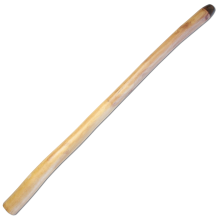
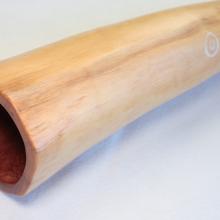
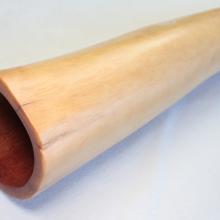
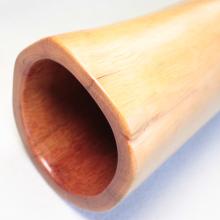
Kurungaï K26
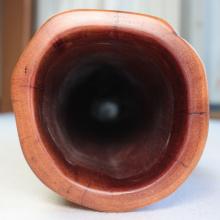
In short: A woollybutt didgeridoo in B flat, very deep. A cavernous sound, rich in textures, ideal for exploring resonance. It is part of the Gauthier Aubé Selection.
Comments from Gauthier Aubé: A cavernous didgeridoo! It is down to the key, of course, but not only that: not all deep didgeridoos have this sound texture you can play with. Ideal for seeking out the resonance of different sounds.
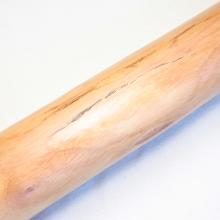
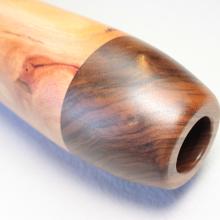
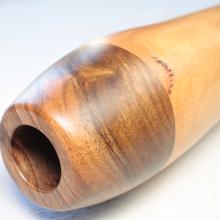
This didgeridoo: This woollybutt is relatively light for its size: 4.2 kg for 171 cm. Very well crafted and perfectly balanced, it is as pleasant to hold as it is to play.
Its low key, B flat, gives it a great roundness of sound without being hungry for air: breathing stays comfortable.
An elegant instrument, as beautiful to look at as it is to listen to.
The Gauthier Aubé Selection: Gauthier is a long-standing friend and, in my eyes, one of the most inspiring musicians on today's didgeridoo scene. He chooses the didgeridoos in the shop that he values for their balance, playing comfort, richness of sound and precision. You can see him play this instrument in the video below the buy button.
- Instrument guaranteed for 1 year
- Shipping is free! (France only)
- Didgeridoo Passion also offers you the carry bag free
Classification
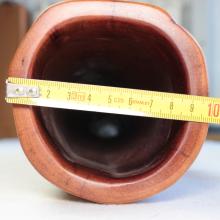
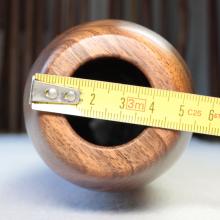
This scale is the result of an air column/bell start ratio If we divide the diameter of the bell with that of the beginning of the air column we get a number between 1.5 and 3.5. We can classify all the didgeridoos in 4 large families. Each family groups the instruments with a similar character, simply based on the overall shape of the air column (conical/cylindrical) and on the diameter of the column (wide/narrow). The result is a simple and very reliable reading grid, making it easier to search and purchase on line.
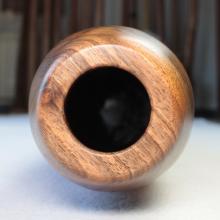
The diameters are measured with a caliper, start of the air column after the mouthpîece. This ratio is very reliable for a didg having a air column with a 'smooth' internal work, in the case of a hollowed eucalyptus instrument it give an approach of the instrumental character.

Kurungaï
French maker of "Kurungaï" didgeridoos
Who am I?
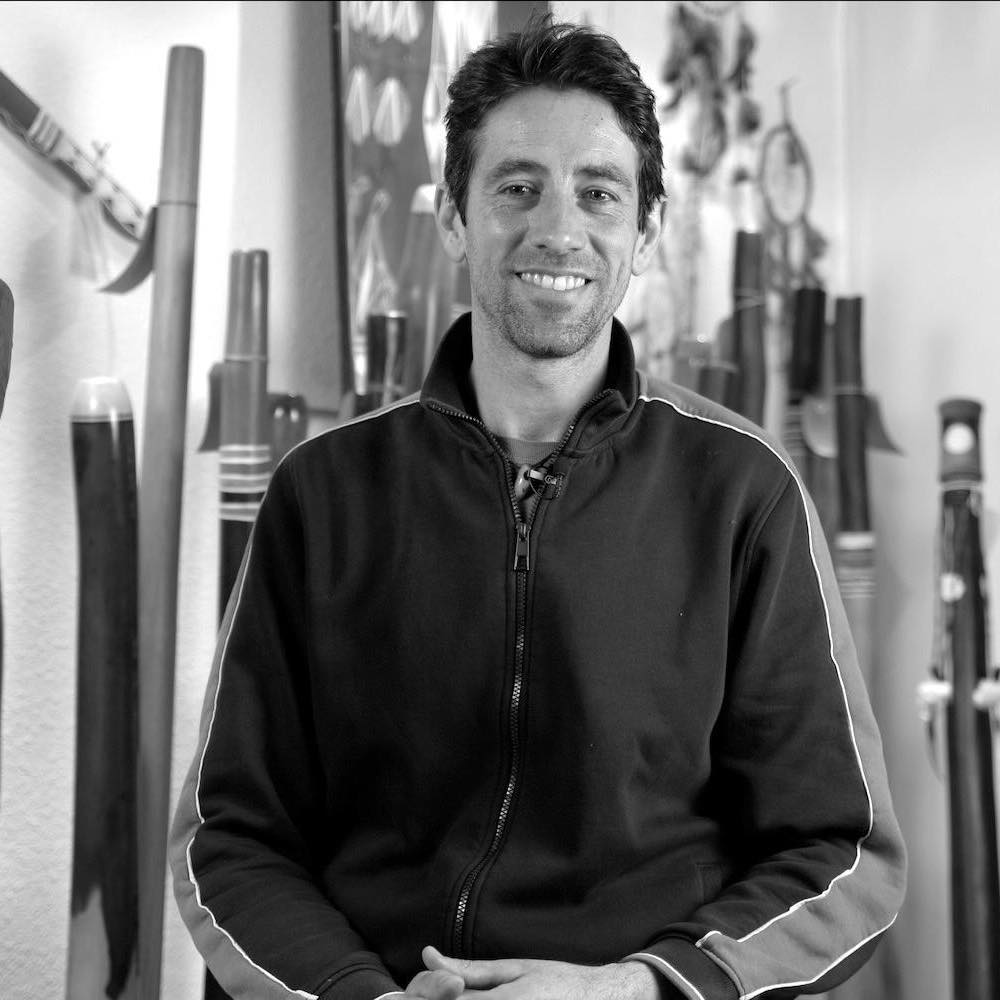
My name is Grégory Zwingelstein and, yes, I am indeed the manager of Didgeridoo Passion. Since 2010 I have combined my passion for the didgeridoo with woodworking, to provide after-sales service for every instrument and, for example, to make custom mouthpieces. Back then I was already making a few instruments. I learned the traditional way of making yidakis from Aboriginal people in Australia, and in the past I have run many making workshops with Bruce Rogers.
All these experiences, along with the hundreds of didgeridoos from all backgrounds that have passed through my hands, have taught me how to make good use of the resources of Australian nature and get the best out of a termite-hollowed eucalyptus trunk. Most of the trunks I use are harvested in autumn, when the sap is no longer active in the trees. They are cut with the permission of the state government, then dry for at least six months before being worked.
How do I make my didgeridoos?
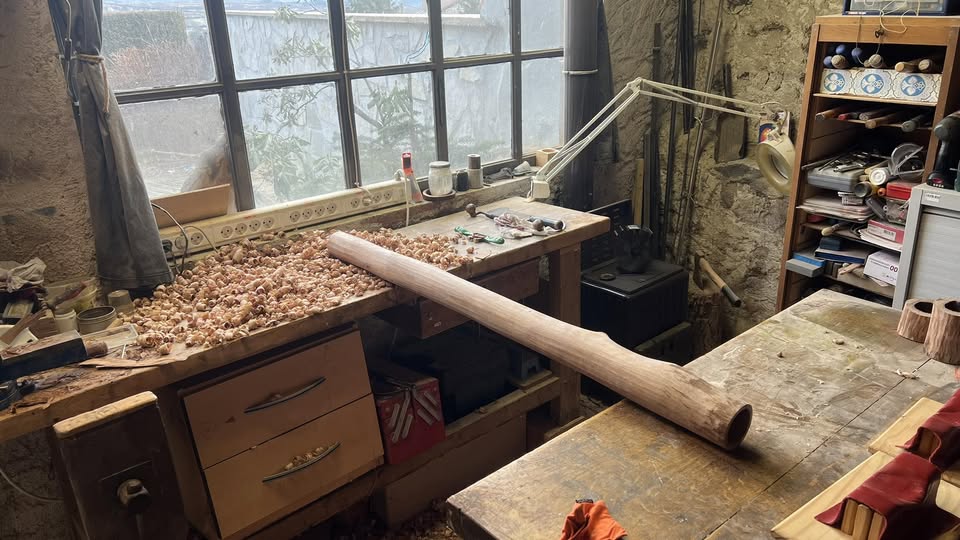
I want to make it clear right away that a large part of the work is done by hand! In my making philosophy, the only way to bring a didgeridoo to life is to follow by hand, with a drawknife and above all a spokeshave, the different growth layers of the eucalyptus. That is how you know when to stop and when to keep taking off shavings. It is manual work that takes a lot of time, for the inside, the outside and the finishing… I start from a trunk of 10 to 15 kg to end up with a didgeridoo of 3 to 4 kg.
For the mouthpieces, I shape a separate wooden mouthpiece for each instrument, in ash, elm, pear, walnut, boxwood or other woods, to ensure optimal comfort and above all the instrument's stability. For the inside, I use Ecopoxy resin (a high-quality bio-based epoxy resin), which keeps the instrument stable over time. For the outside finish, I apply a hard oil in several coats, for a more natural, satin look, far from the epoxy finish, which is much too glossy for my taste.
What does my logo mean?
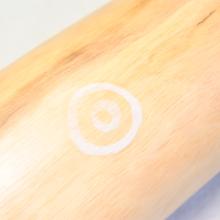
I did not choose this logo by chance. It has several meanings, but the main one is coming together.