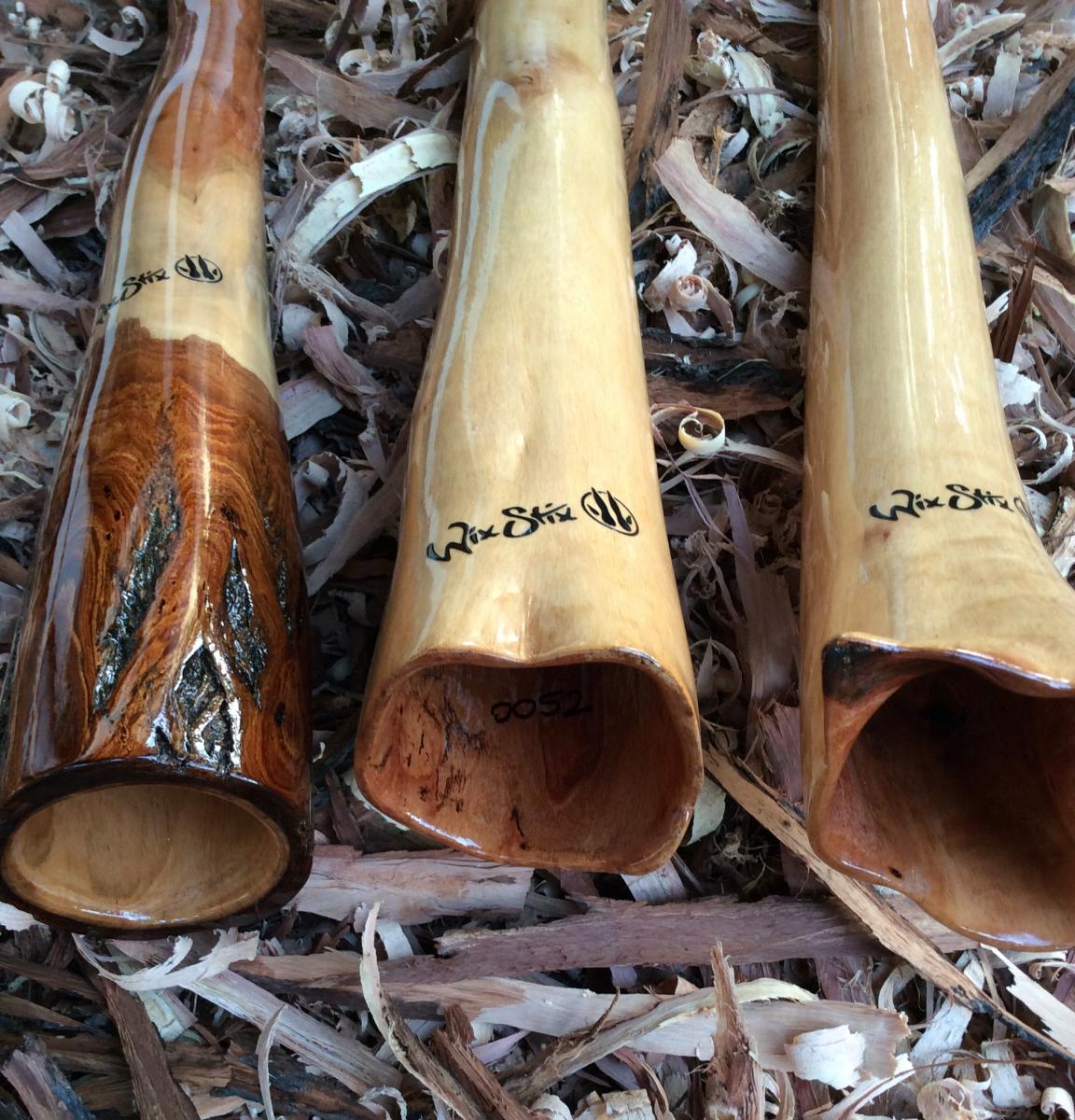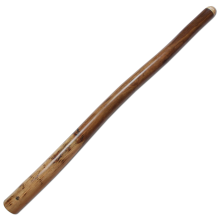
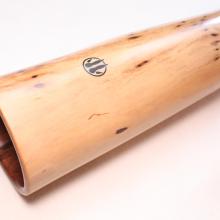
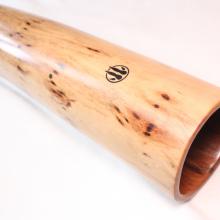
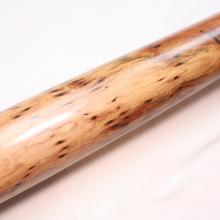

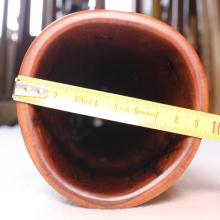
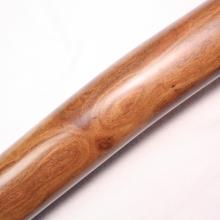
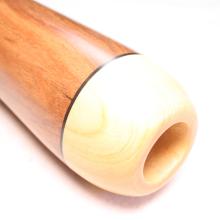
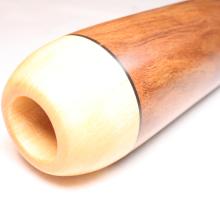
Wix Stix 0479
Why is this didg takes part of the Selection Gauthier Aubé? In addition to being a long-time friend, Gauthier is in my eyes one of the most inspiring musicians on the current didgeridoo scene. It was therefore quite natural that I proposed to him to collaborate on a selection of instruments.
The idea is simple: Gauthier chooses and recommends didgeridoos of didgeridoo-passion that he particularly likes. Each selected didgeridoo corresponds to its requirements: balance, playing comfort, sound richness, precision... Gauthier is recognized for his technical insight but also for his pedagogical approach, which makes him an excellent guide for all enthusiasts looking for a good instrument! For each model in this selection, you will find a video of Gauthier playing it and his commentary, so you can hear his potential and better feel what he has to offer.
Comments from Gauthier : A large, substantial instrument in C#. Personally, I like heavier didgeridoos for their grounded drone and well-defined harmonics. The wide bore provides a lot of roundness. Like all Wix-Tix, it handles voice techniques very well. One caution: the weight. Without a stand, it might be difficult to transport or play for long periods. But for studio use, it’s perfect — an ideal instrument for recording.
My comments: A enthusiast who takes time in manufacturing, quality before quantity! Bruce started making didges in the mid-90s, this passion is still strong 30 years later! All Bruce trunks have been dried for a minimum of 12 months before being processed. Bruce does not use wax to reduce the size of his mouthpieces. Either the hole is the right diameter and in this case Bruce works the mouthpiece in a natural way. Either he uses an embouchure insert. A real plus for getting the most comfortable mouthpiece! Bruce's didgeridoos have an unbeatable quality of manufacturing, finish, playability and price ratio.
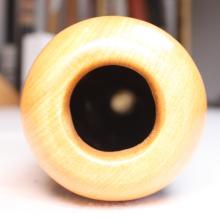
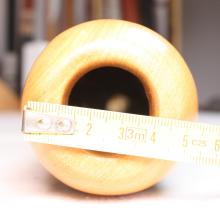
Didgeridoo with a resonant and soft sound, ideal for harmonics, meditative playing and wobbles. Ash mouthpiece .
- Instrument guaranteed for 1 year
- Shipping costs are free! (only for France)
- Didgeridoo Passion also offers you the carrying case!
Classification
This scale is the result of an air column/bell start ratio If we divide the diameter of the bell with that of the beginning of the air column we get a number between 1.5 and 3.5. We can classify all the didgeridoos in 4 large families. Each family groups the instruments with a similar character, simply based on the overall shape of the air column (conical/cylindrical) and on the diameter of the column (wide/narrow). The result is a simple and very reliable reading grid, making it easier to search and purchase on line.
The diameters are measured with a caliper, start of the air column after the mouthpîece. This ratio is very reliable for a didg having a air column with a 'smooth' internal work, in the case of a hollowed eucalyptus instrument it give an approach of the instrumental character.

Bruce Wix Stix
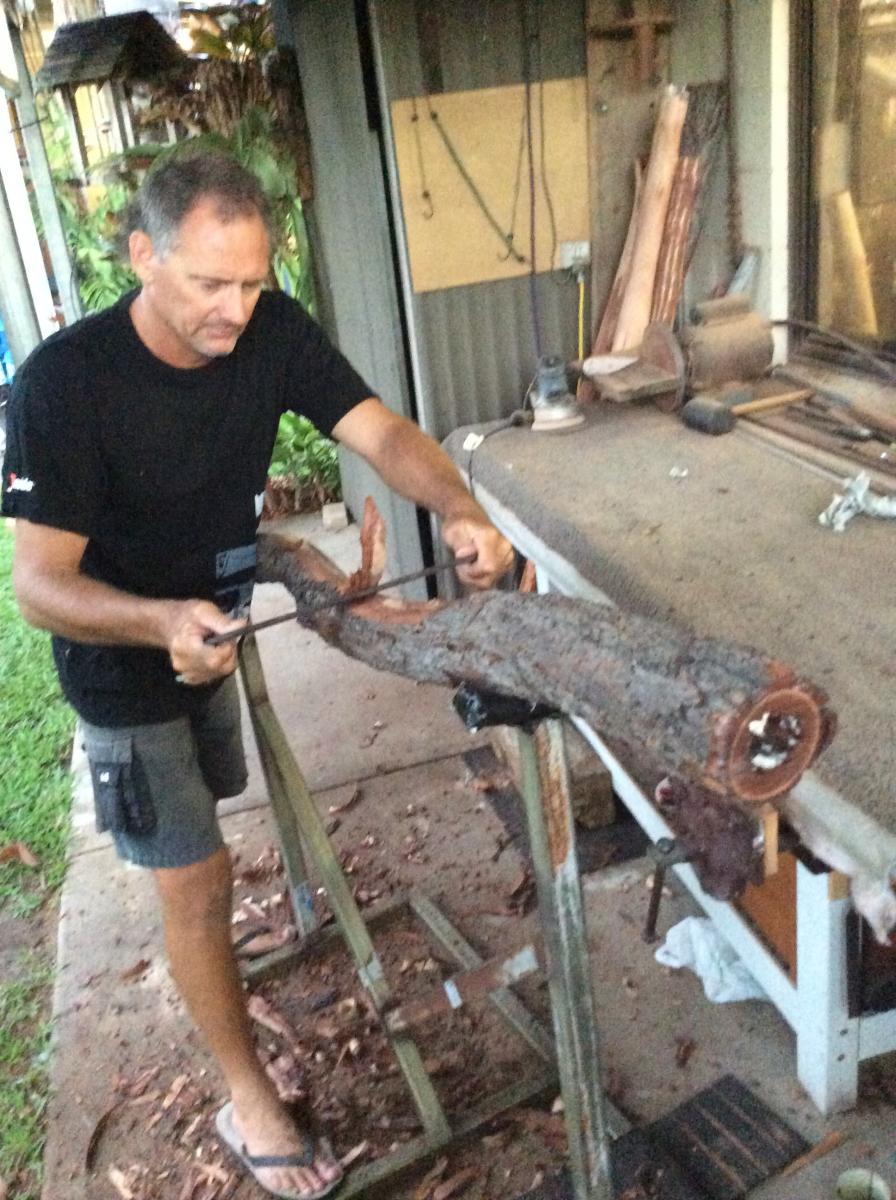
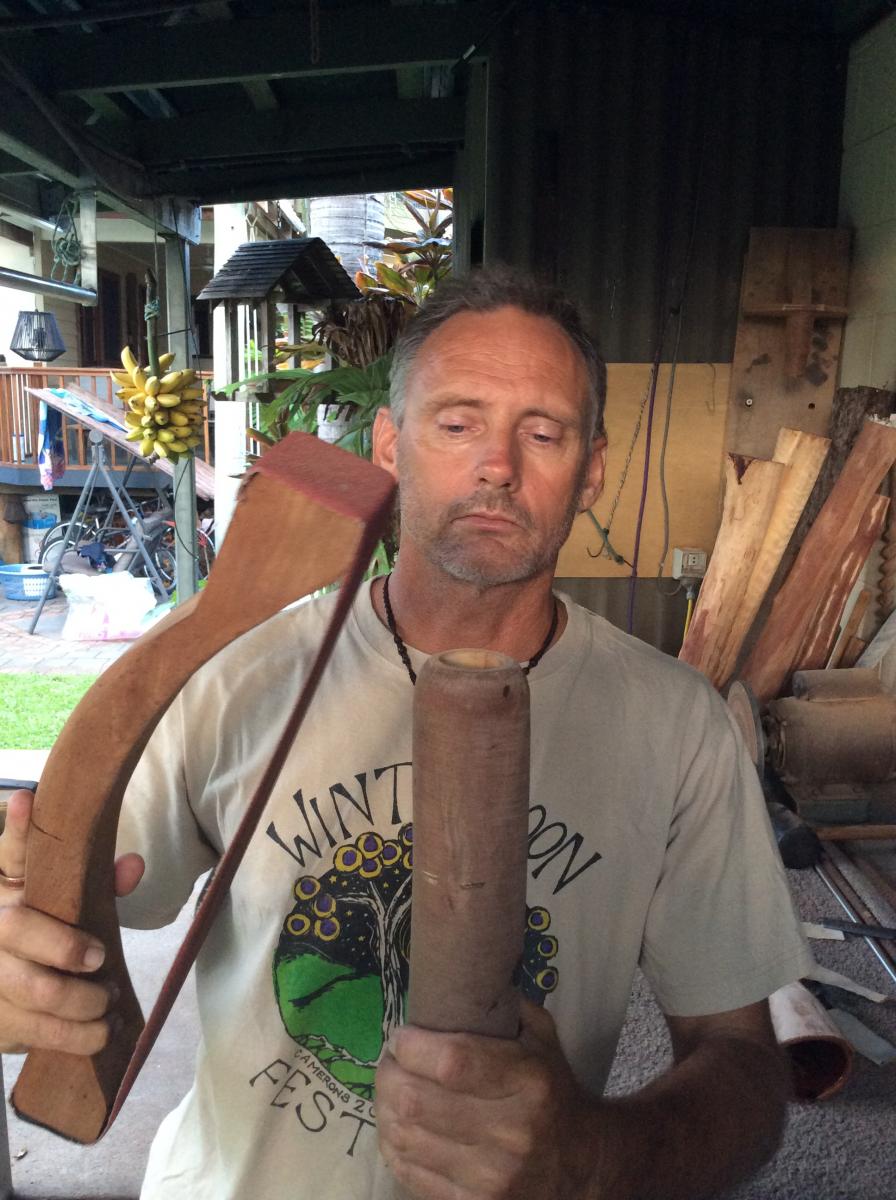
Bruce Wix, maker of Wix Stix didgeridoos
A passionate maker who takes his time: quality before quantity!
Bruce started making didgeridoos in the mid-1990s, and his passion is still as strong thirty years later! He works with three types of eucalyptus:
- Woollybutt
- Ironbark
- Box
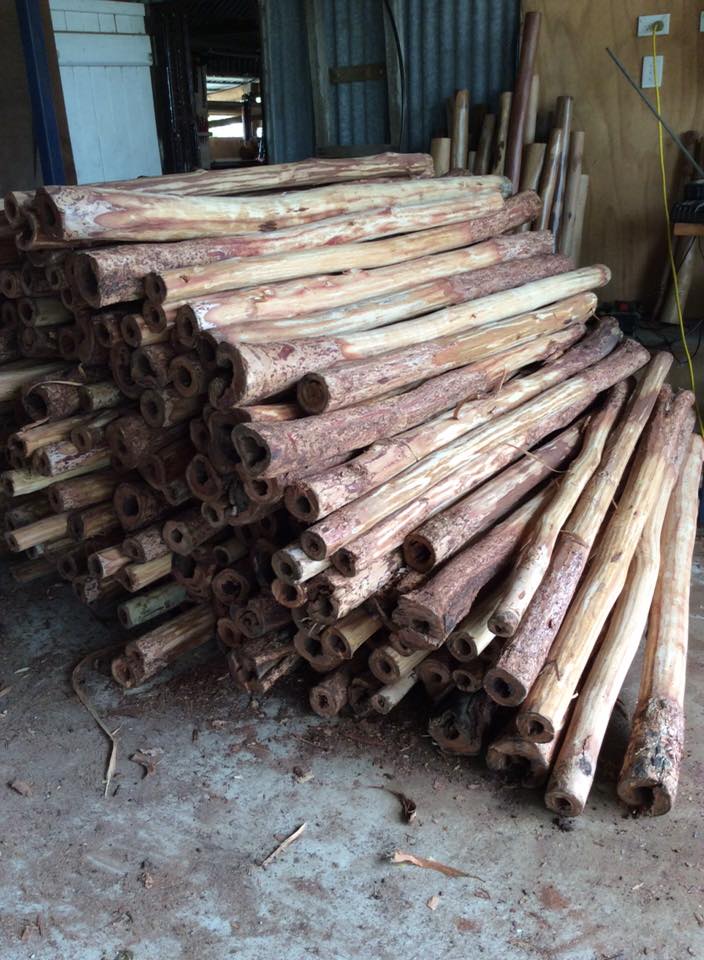
All his termite-hollowed logs come from northern Queensland and are cut by a renowned Aboriginal traditional owner. They dry for at least twelve months before being worked. Bruce does not use wax to reduce the diameter of his mouthpieces.
Either the natural hole is the right diameter, in which case Bruce shapes the mouthpiece directly in the wood, or he fits a camphor laurel mouthpiece, a wood known for its antibacterial qualities. As far as I know, Bruce is the only maker to use this kind of insert: a real plus for a mouthpiece that is both very comfortable and antibacterial.