


Tristan O'Meara 106
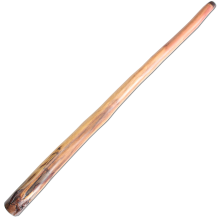
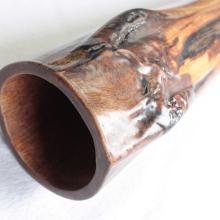
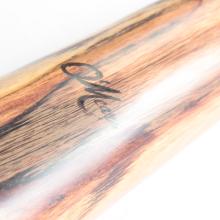
In short: A Tristan O'Meara didgeridoo in woollybutt, in D#: elegant, ultra-versatile, with a very easy toot, round, clean and precise. One of my favourites.
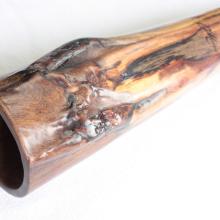
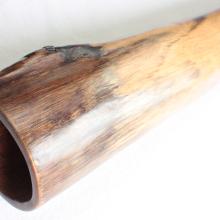
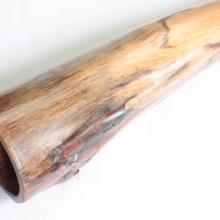
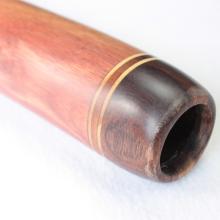
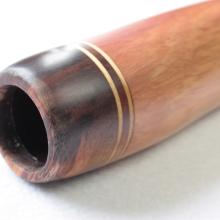
This didgeridoo: A great instrument: it is not the biggest in size, but it is very elegant, with a superb bell. Beneath its modest looks hides an ultra-versatile didgeridoo: superb response, ultra-easy toot, round, clean and precise. One of my favourites!
How it is made: All of Tristan's didgeridoos are handmade, with the help of a few power tools for sanding and polishing.
They soak for 24 hours in a blend of natural oils, inside and out: the wood becomes saturated, its natural colours come out and its fibres harden, which increases its density and the quality of the sound.
The outside then receives several coats of high-quality epoxy resin, flexible and UV-resistant. Each instrument has a wooden mouthpiece worked to its dimensions and perfectly made: inner diameter, size and finish.
- Instrument guaranteed for 1 year
- Shipping is free! (France only)
- Didgeridoo Passion also offers you the carry bag free
Classification
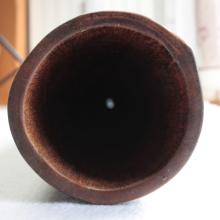
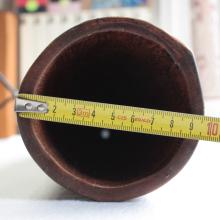
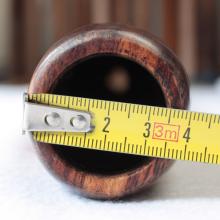
This scale is the result of an air column/bell start ratio If we divide the diameter of the bell with that of the beginning of the air column we get a number between 1.5 and 3.5. We can classify all the didgeridoos in 4 large families. Each family groups the instruments with a similar character, simply based on the overall shape of the air column (conical/cylindrical) and on the diameter of the column (wide/narrow). The result is a simple and very reliable reading grid, making it easier to search and purchase on line.
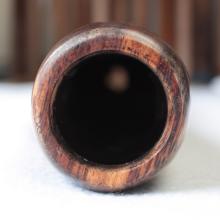
The diameters are measured with a caliper, start of the air column after the mouthpîece. This ratio is very reliable for a didg having a air column with a 'smooth' internal work, in the case of a hollowed eucalyptus instrument it give an approach of the instrumental character.
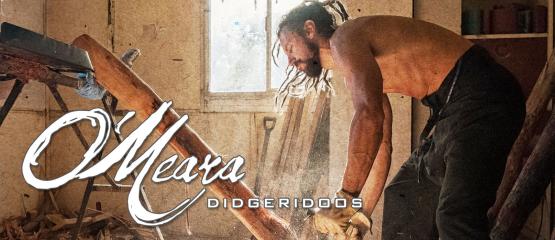
Tristan O'Meara
A musician at heart, Tristan has been making didgeridoos for over 10 years
What started as a hobby has become his livelihood: making didgeridoos of the highest quality.
Who is Tristan O'Meara?
"My name is Tristan O'Meara. I have been a musician and singer-songwriter for over 10 years, and I now live in Byron Bay, Australia. I was lucky enough to be introduced to the didgeridoo by Wuduri Wiriundjara, a renowned Aboriginal artist from the Cairns area.
Over time I have learned what each player needs from a didgeridoo, depending on their style: big stage, outdoor or indoor playing, acoustic solo, recording studio, street performance or travel! I do my best to find the instrument that suits each player best. All my instruments are made from the finest eucalyptus (the ones that don't suit me end up as firewood, and they burn very well…). Each didgeridoo is worked and carved while listening for its best resonance.
Back when I was learning didgeridoo techniques, I was looking for different keys to suit my music, but I couldn't afford to buy them all. So I decided to travel to the Northern Territory. There I was lucky enough to meet several traditional owners, who showed me how to make a didgeridoo and how to find good logs properly hollowed out by termites in the Australian bush. These people kindly shared their time, skills and knowledge with me. It was a long and often very difficult apprenticeship that lasted several years.
Over the last ten years I have made didgeridoos with Aboriginal people, but also for renowned makers. I have spent countless hours perfecting my techniques, keeping everyone's ideas and improving my method day after day.
How does Tristan make his didgeridoos?
All my didgeridoos are made entirely by me, from start to finish. They are handmade, with the help of a few power tools for sanding. The inside and outside are soaked in a blend of natural wood oils, left for 24 hours. This saturates the wood and brings out its natural colours, but the oil also penetrates deep into the fibres to harden and crystallise them, which increases the density of the wood and the quality of the sound. The outside is then finished with several coats of high-quality, flexible, UV-resistant epoxy resin."