
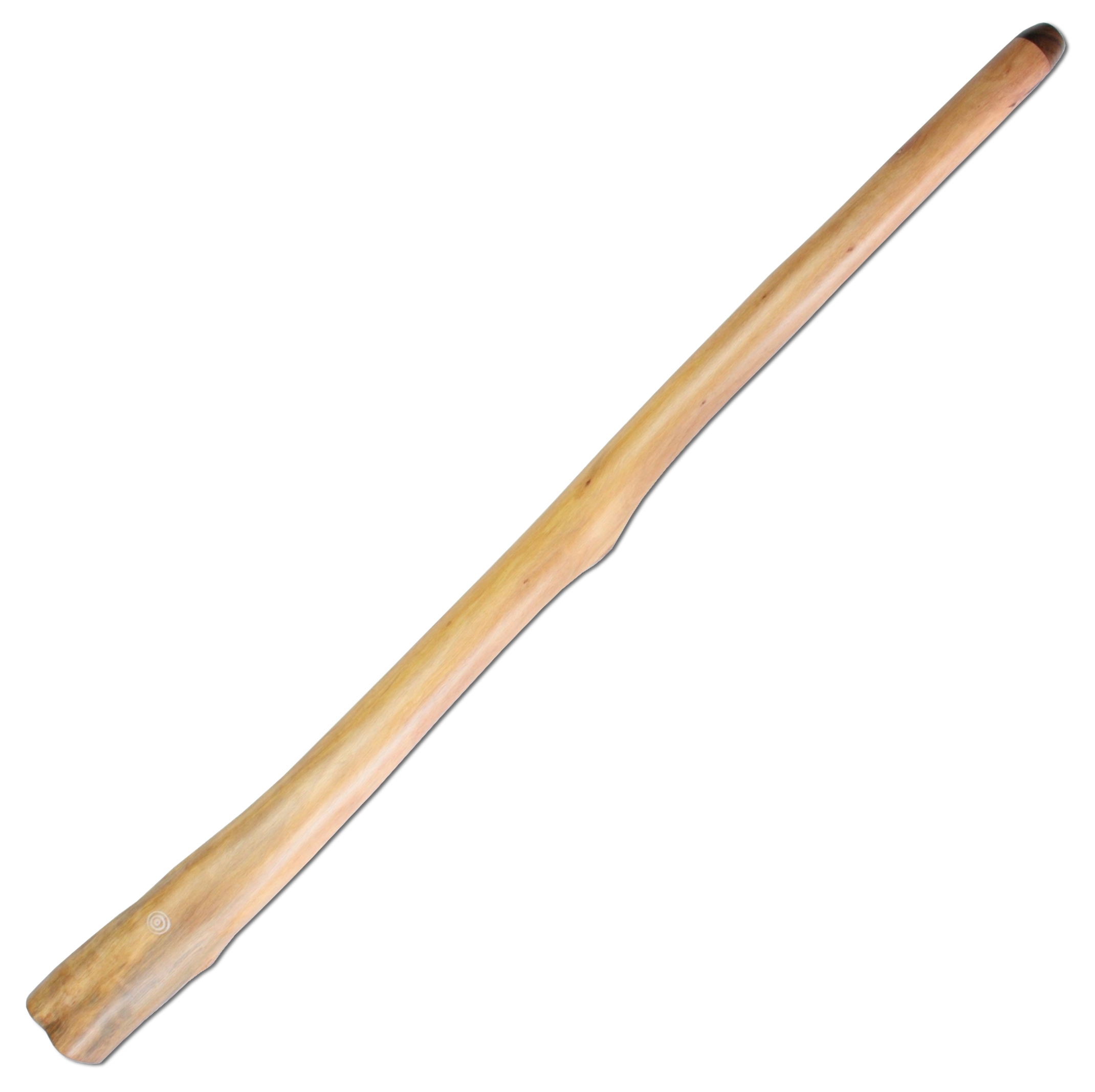
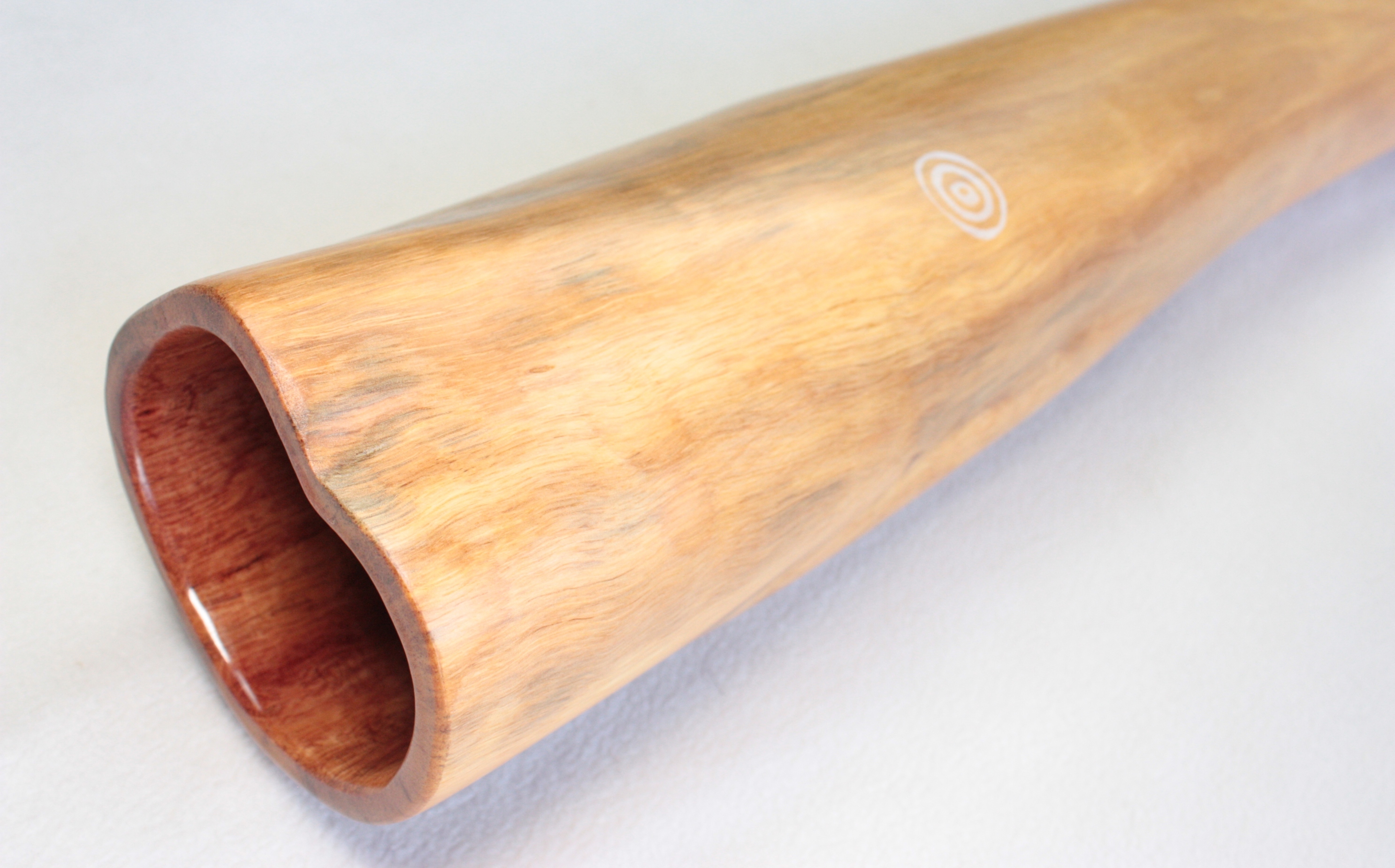
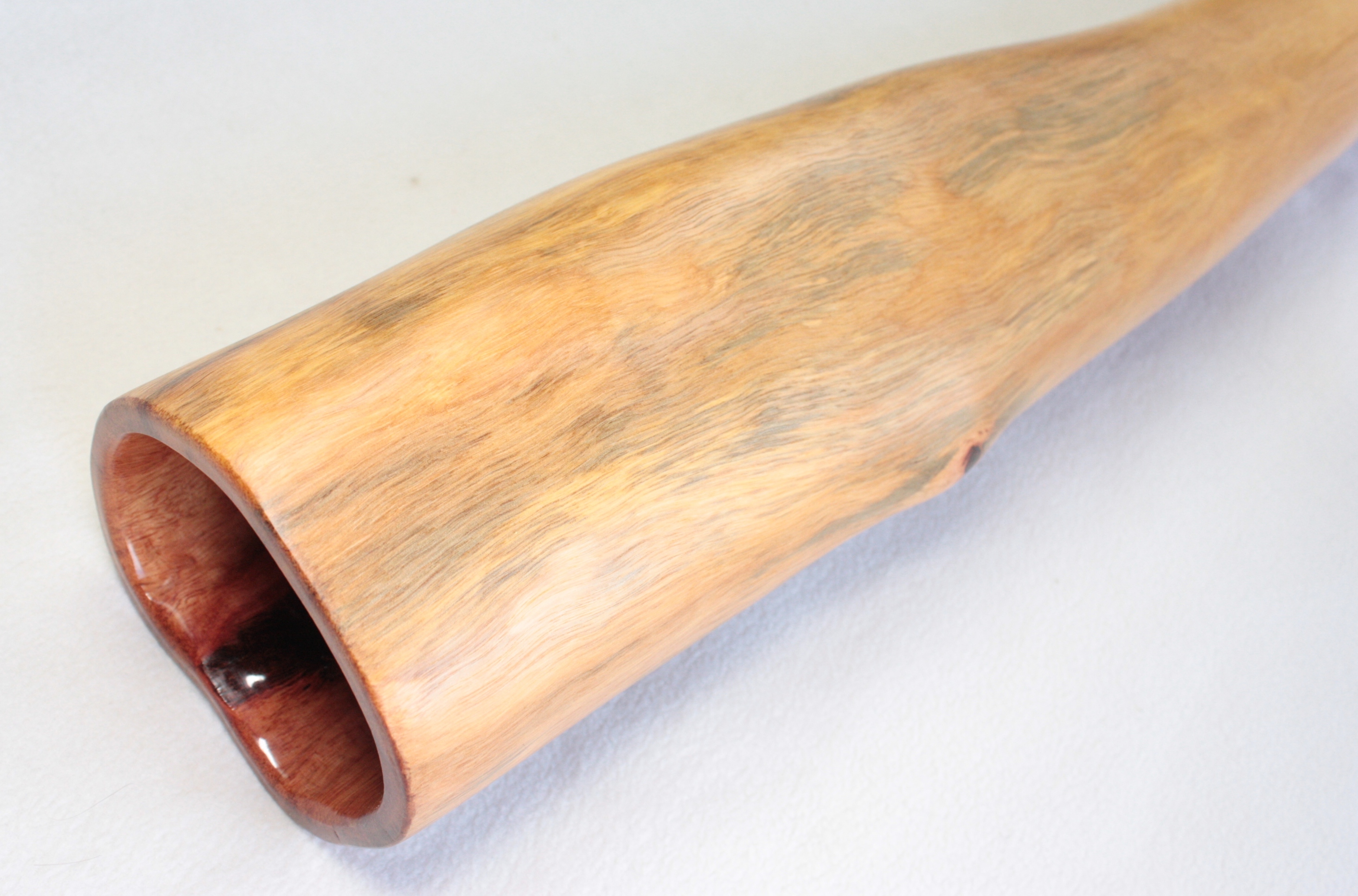
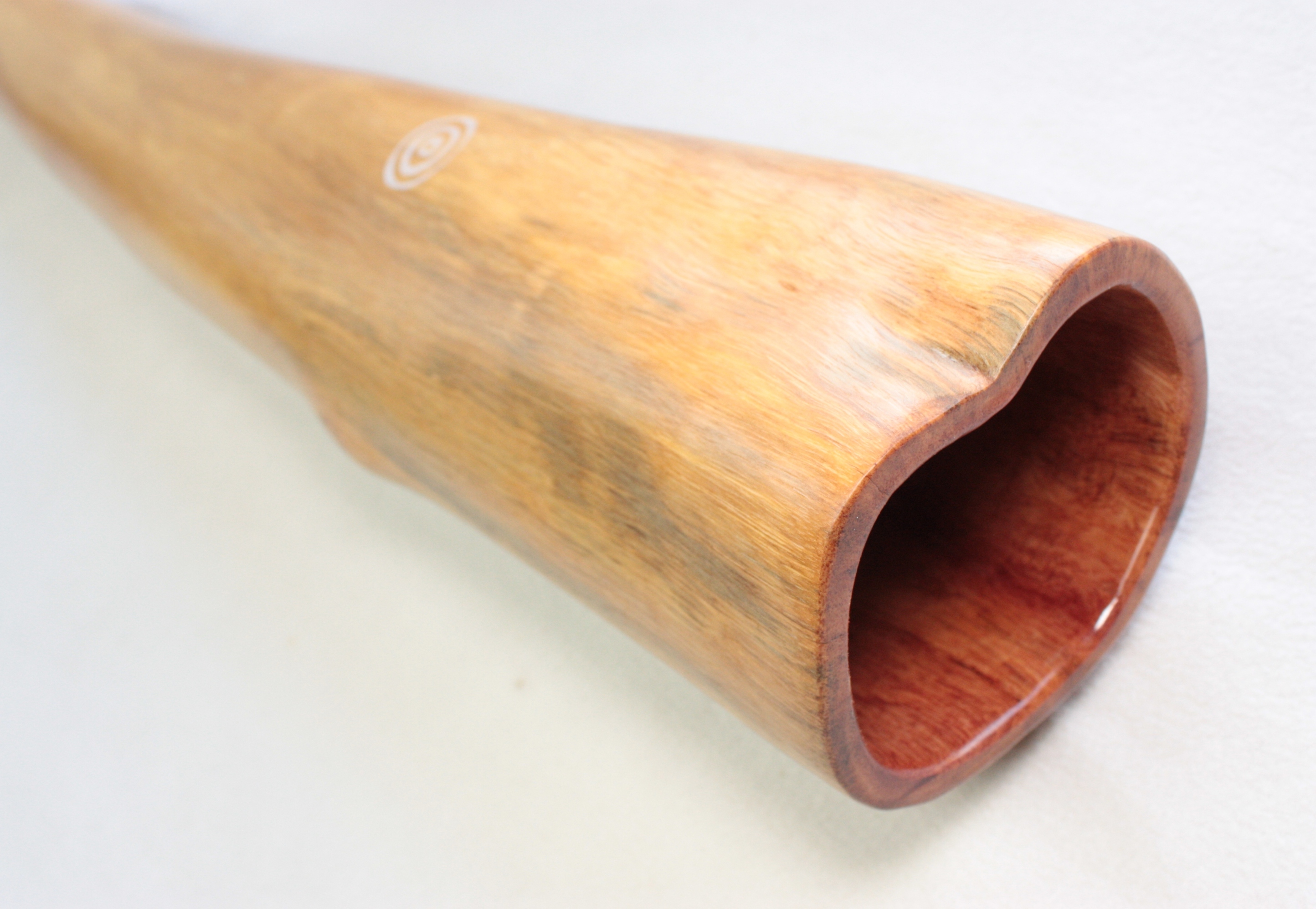
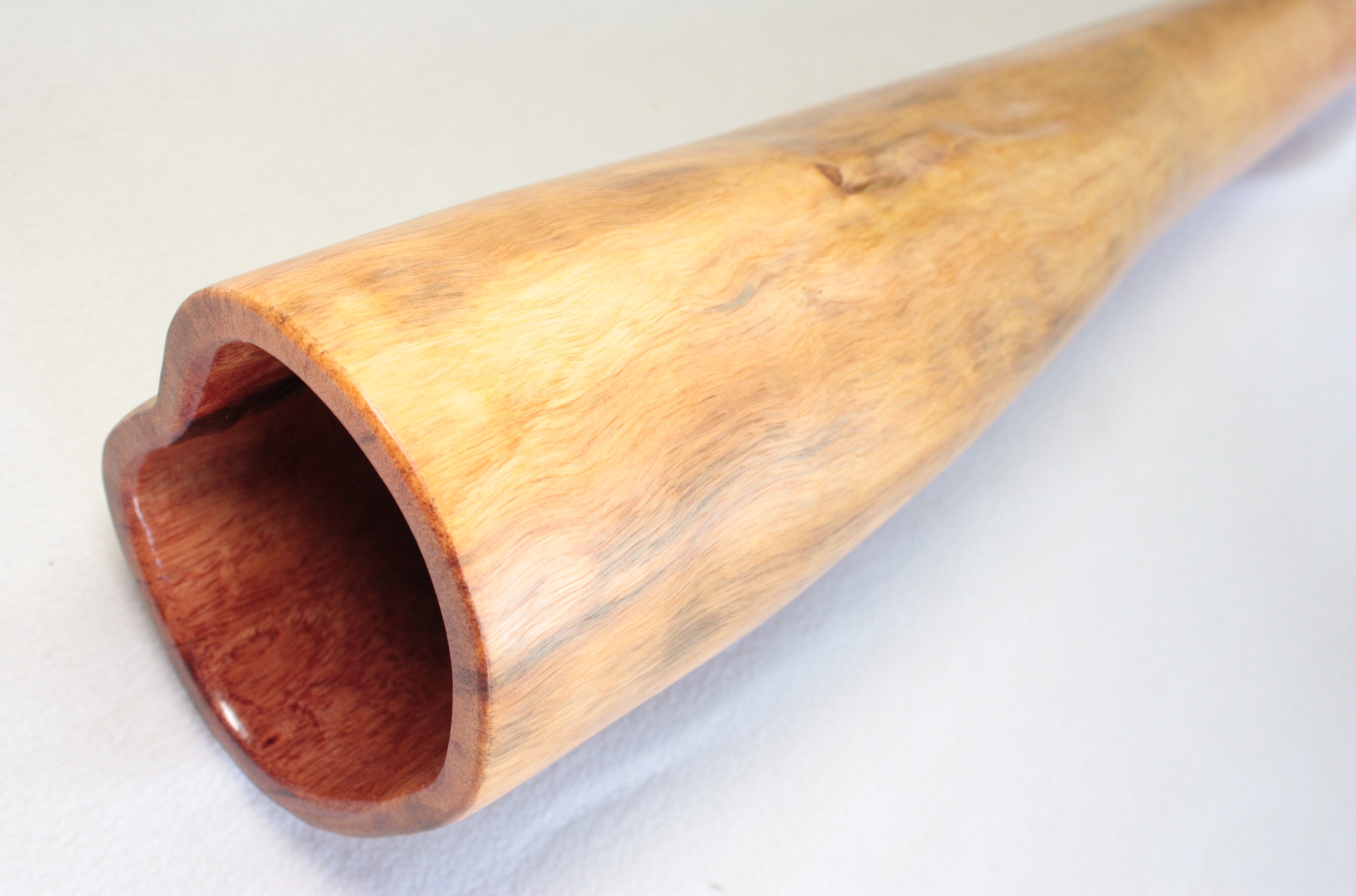
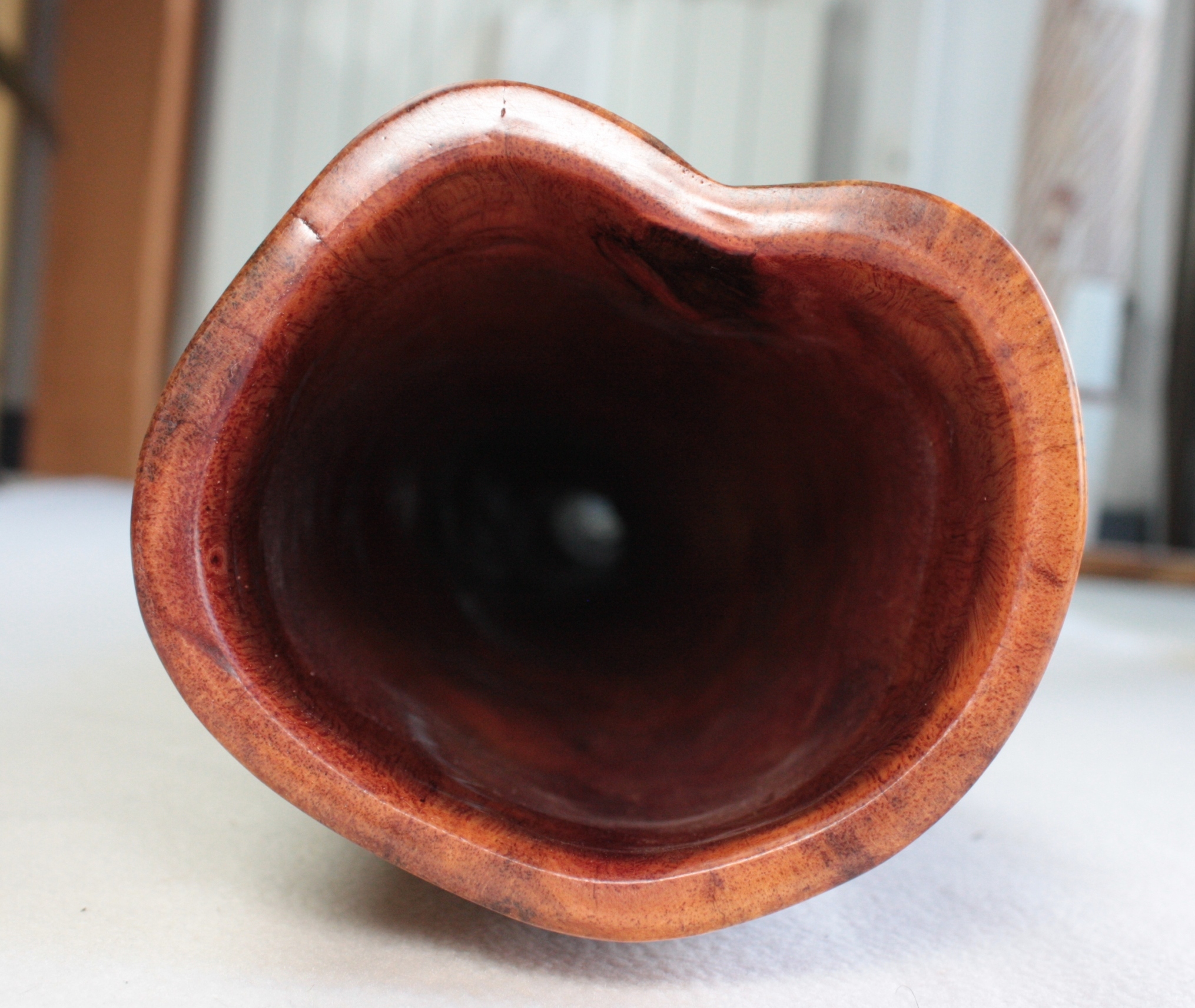
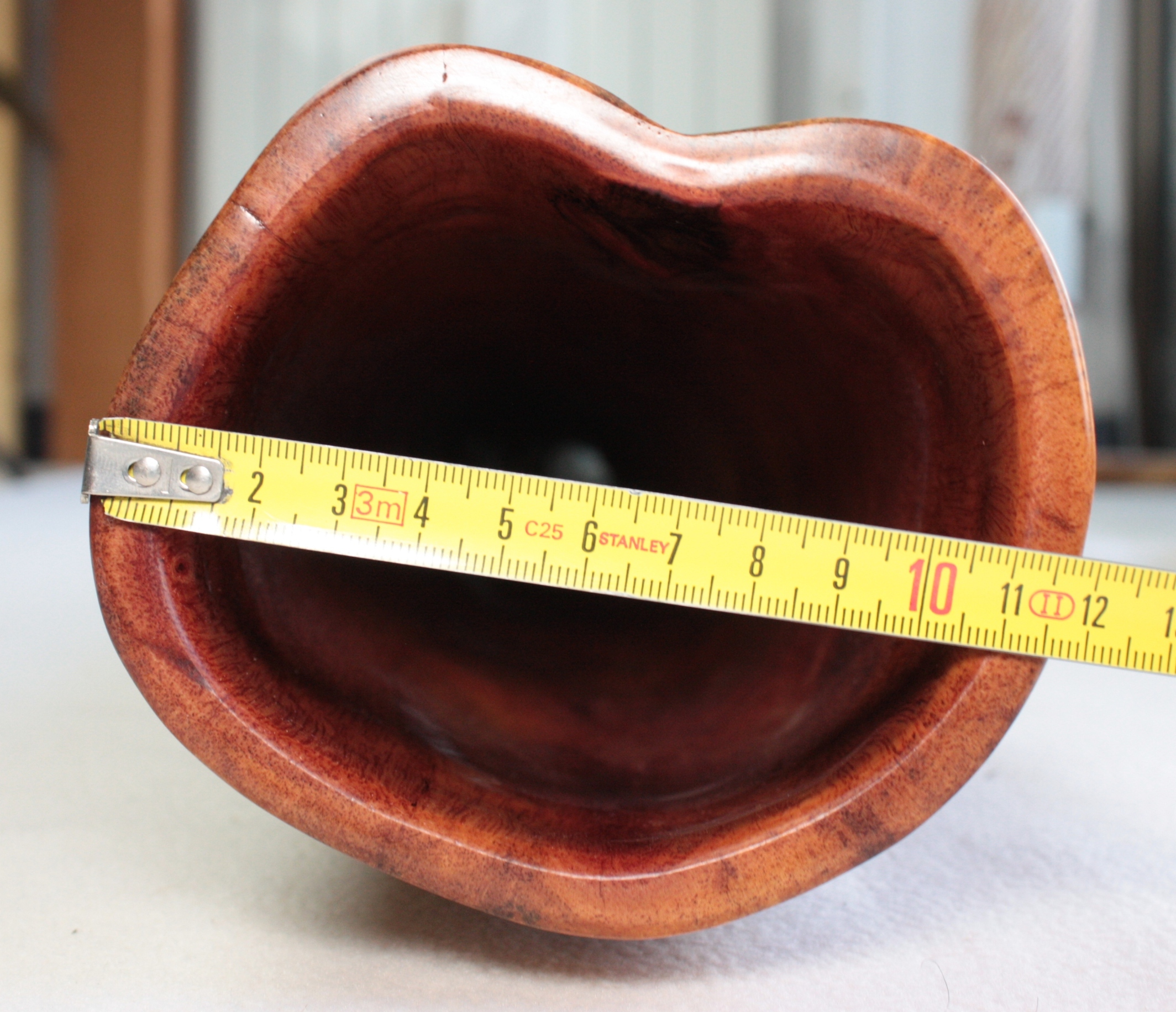
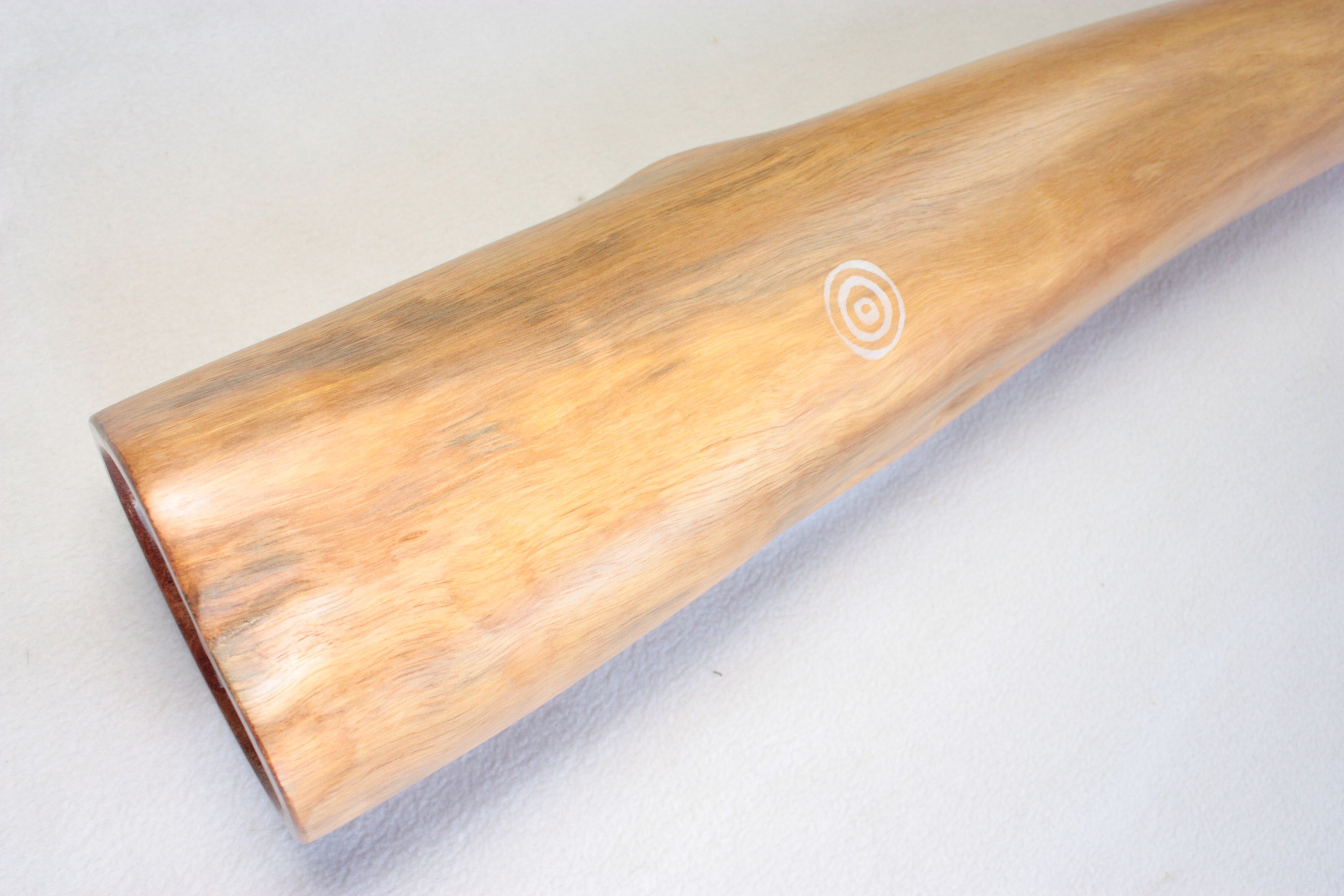
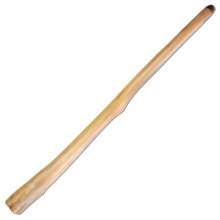
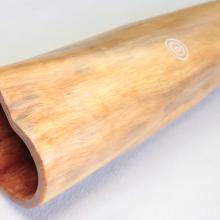
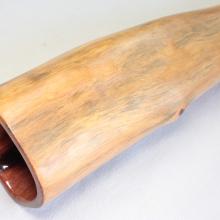
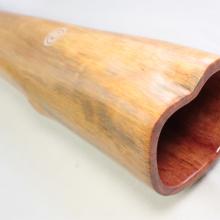
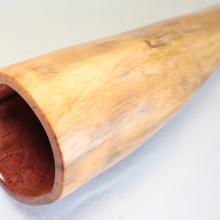
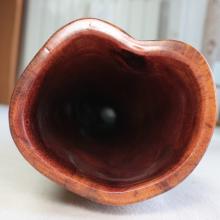
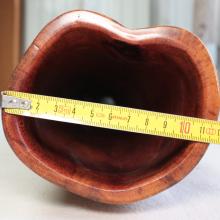
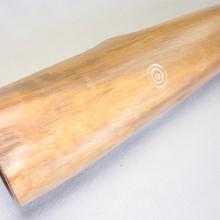
Kurungaï K22
My comments: After a rollercoaster year in 2024, I have decided to actively resume making instruments in 2025. I want to emphasize that a significant portion of the work is done by hand. My crafting philosophy holds that the only way to truly "bring a didgeridoo to life" is to manually follow the eucalyptus's natural growth layers using tools like drawknives and, above all, spokeshaves. This allows me to sense exactly when to stop and when more wood needs to be shaved away. It is a time-consuming manual process, spanning everything from the initial shaping using gouges for both the interior and exterior to the final finishing stages. I start with a log weighing 10 to 15 kg to produce a finished didgeridoo weighing between 3 and 4 kg. As for the mouthpieces, I hand-craft a separate attachment for each instrument using woods like ash, pear, walnut, or boxwood to ensure optimal comfort and, crucially, the instrument's stability. For the interior treatment, I use Ecopoxy (a high-quality, bio-based epoxy resin) to guarantee long-term stability. For the exterior finish, I apply multiple coats of hard oil to achieve a natural, satin look, avoiding the overly glossy epoxy finish that I personally dislike.
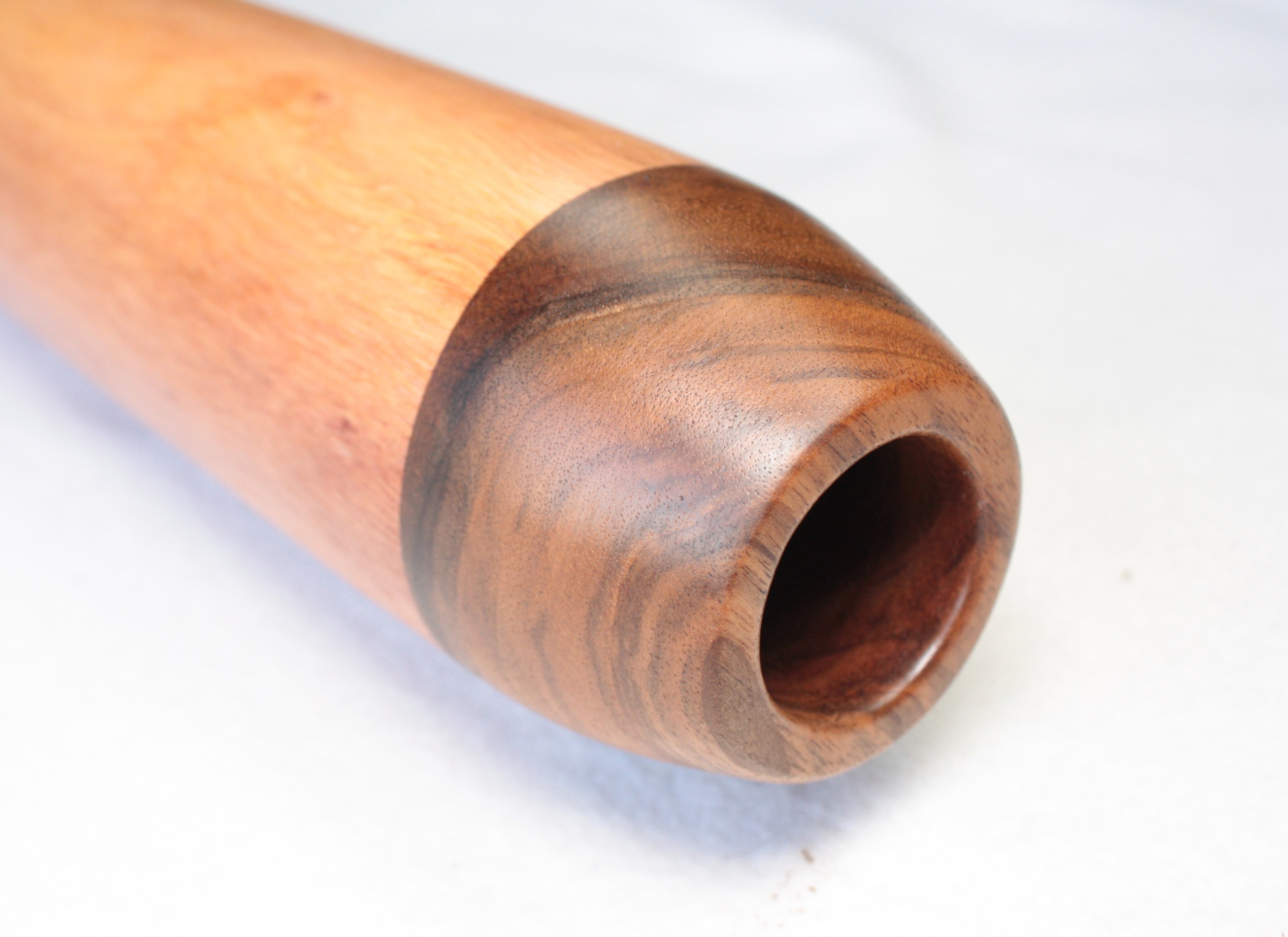
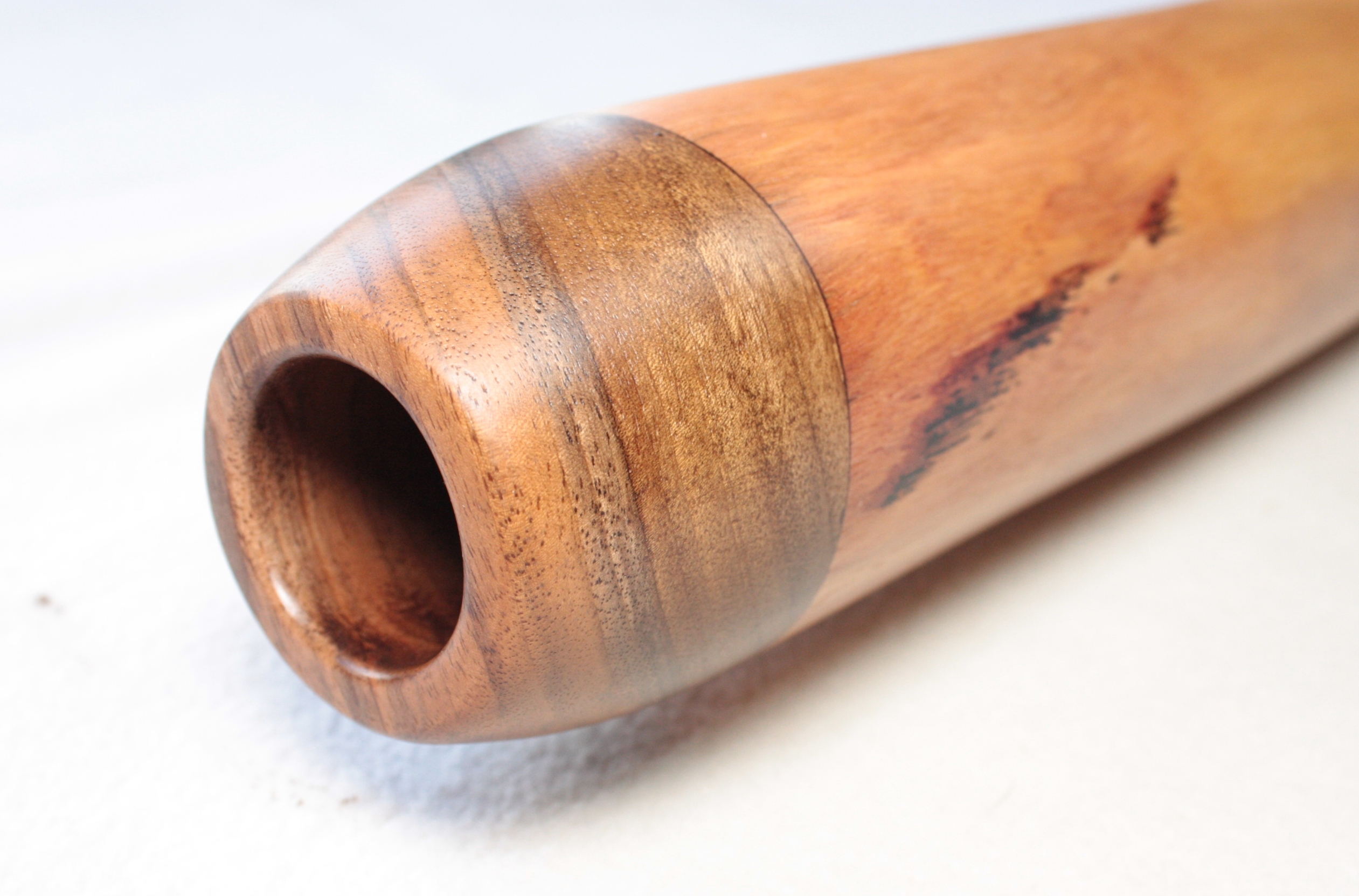
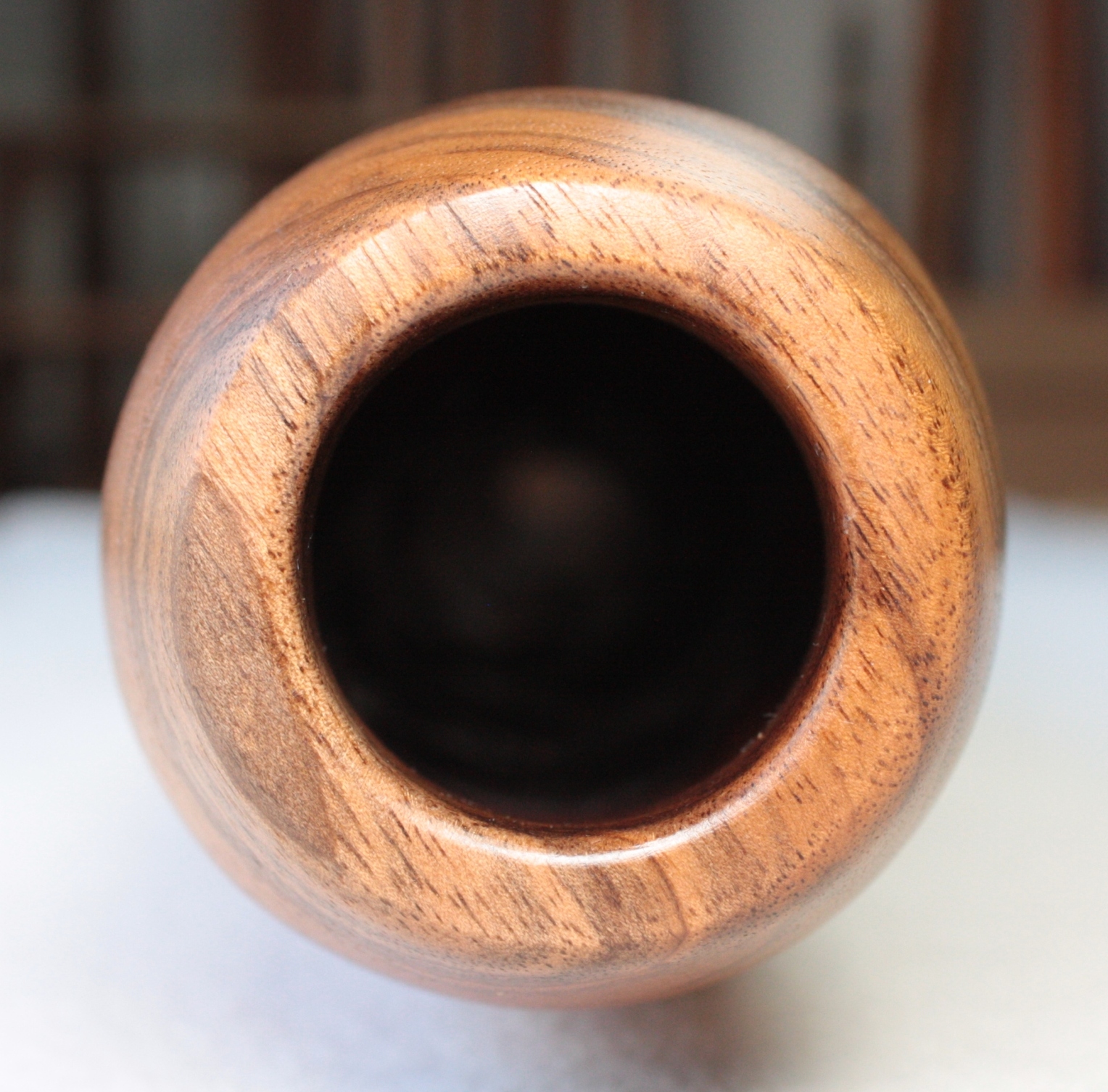
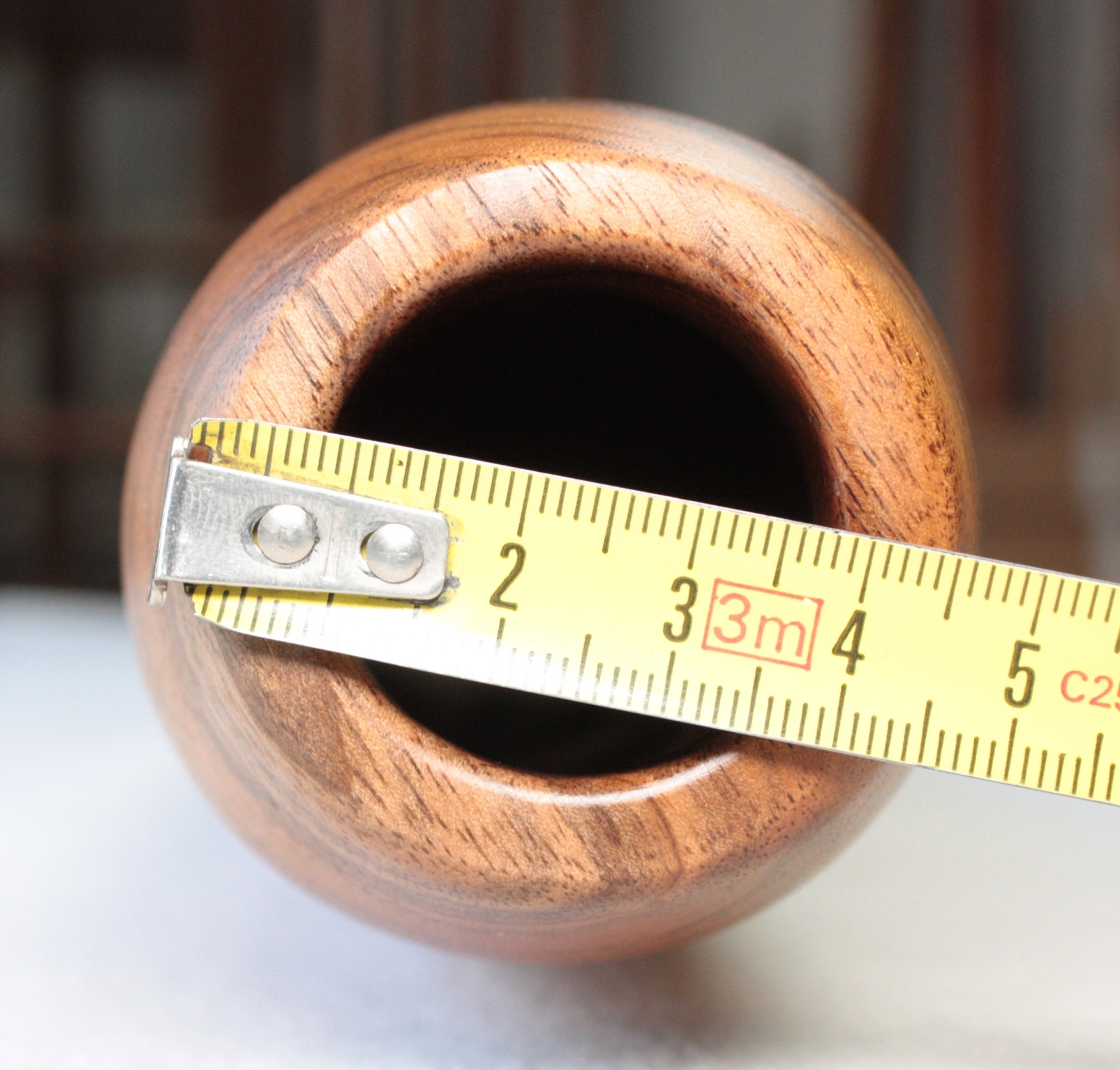
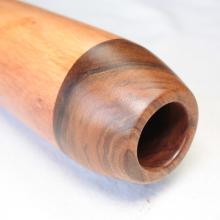
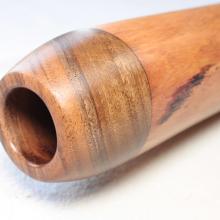
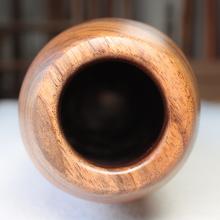
Didg Characteristics : I really enjoyed working on this didgeridoo; things can get complicated quickly at times, but for once, this one didn't give me too much trouble... It’s a beautiful piece with a substantial size. The kind of didgeridoo you just can't put down once you start playing it! Walnut mouthpiece. Note that I chose to tune it to 432 Hz; it was already at that frequency when I made the tuning cut, so I decided to leave it that way.
- Shipping costs are free! (only for France)
- Free carrying case!
Classification
This scale is the result of an air column/bell start ratio If we divide the diameter of the bell with that of the beginning of the air column we get a number between 1.5 and 3.5. We can classify all the didgeridoos in 4 large families. Each family groups the instruments with a similar character, simply based on the overall shape of the air column (conical/cylindrical) and on the diameter of the column (wide/narrow). The result is a simple and very reliable reading grid, making it easier to search and purchase on line.
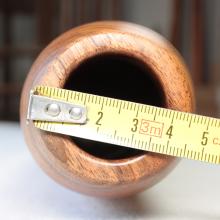
The diameters are measured with a caliper, start of the air column after the mouthpîece. This ratio is very reliable for a didg having a air column with a 'smooth' internal work, in the case of a hollowed eucalyptus instrument it give an approach of the instrumental character.

Kurungaï
French manufacturer of "Kurungaï" didgeridoos
Who am I?
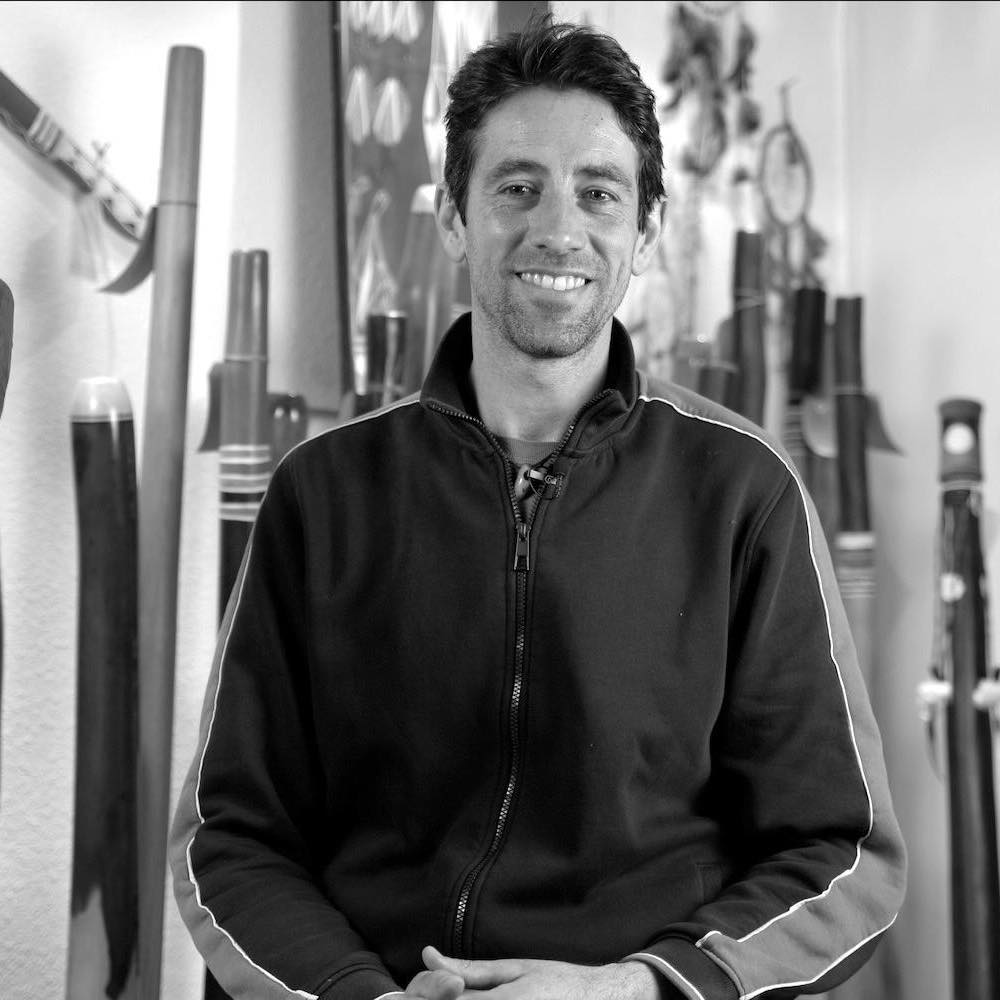 My name is Gregory Zwingelstein, and yes I am the ' manager ' of Didgeridoo Passion. Since 2010 I have been mixing my passion for the didgeridoo and woodworking to provide after-sales service for each instrument and to (for example) make custom mouthpieces. At that time, I was already making a few instruments. I learned with the Aborigines in Australia the traditional way of making yidakis, and in the past organized multiple manufacturing courses with Bruce Rogers.
All these experiences and the hundreds of didgeridoos from different horizons have allowed me to understand how to use the resources of Australian nature, and get the most out of a termite eucalyptus trunk. The trunks I use are mostly collected generally in autumn, when the sap is not active in the trees. They are cut under the authorization of the state government. Before being worked they dry for at least 6 months.
How do I make my didgs?
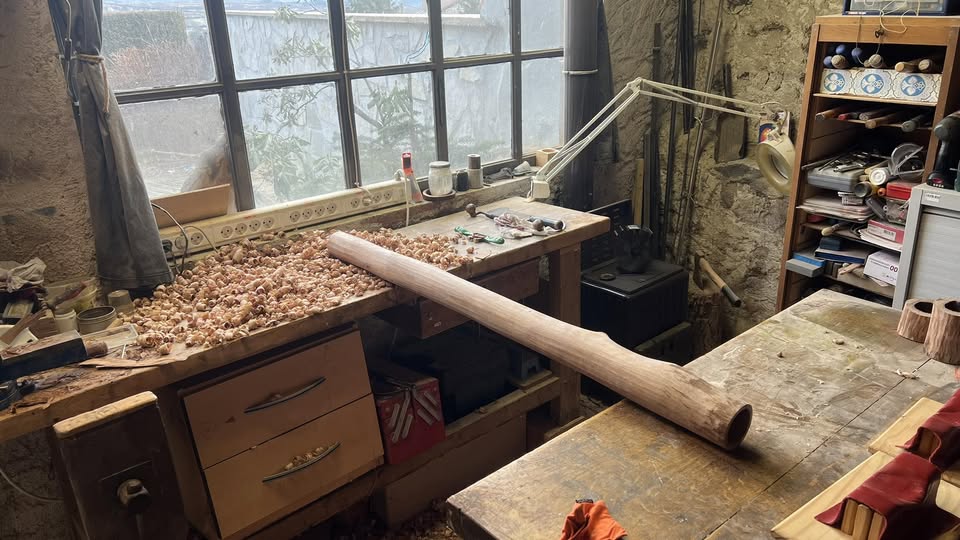
I want to immediately clarify that I like working by hand, really! Because in my manufacturing philosophy, the only way to "give birth" to a didgeridoo is to follow by hand (with a plane, and especially a spokeshave) the different layers of the eucalyptus growth. To know when to stop or when to make more shavings. A manual job that takes a lot of time, both in the internal and external manufacturing phase as well as in the finishing phase... So I start with a trunk ranging from 10 to 15kg to produce a didgeridoo between 3 and 4kg...
Concerning the mouthpieces, I make for each instrument a mouthpiece made of wood such as ash, elm, pear, walnut, boxwood or others in order to ensure optimal comfort but especially the stability of the instrument. For the interior treatment, I use ecopoxy resin (high quality bio-sourced epoxy resin) to ensure the stability of the instrument over time. And for the exterior finish, I use a hard oil in several layers in order to obtain a more natural and satin finish, far from the epoxy finish which is too glossy for my taste.
What does my logo mean?
I did not choose this logo by chance, it has several meanings but the main one is gathering.