


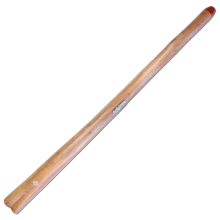

Kurungaï K08
Why is this didg takes part of the Selection Gauthier Aubé? In addition to being a long-time friend, Gauthier is in my eyes one of the most inspiring musicians on the current didgeridoo scene. It was therefore quite natural that I proposed to him to collaborate on a selection of instruments.
The idea is simple: Gauthier chooses and recommends didgeridoos of didgeridoo-passion that he particularly likes. Each selected didgeridoo corresponds to its requirements: balance, playing comfort, sound richness, precision... Gauthier is recognized for his technical insight but also for his pedagogical approach, which makes him an excellent guide for all enthusiasts looking for a good instrument! For each model in this selection, you will find a video of Gauthier playing it and his commentary, so you can hear his potential and better feel what he has to offer.
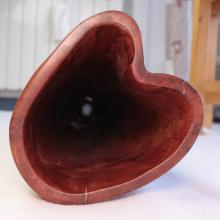
Comments from Gauthier : A versatile C-sharp instrument, it gives the feeling of being able to play many different things. I particularly like the attacks of the "kouf" sound, which resonates very well in this air column. The instrument has a nice opening at the beginning of the air column, without being excessive. And finally, its bell is rather imposing, which gives a ratio of a didgeridoo to a full sound with a nice responsiveness.
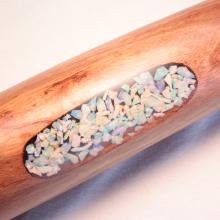
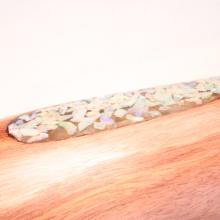
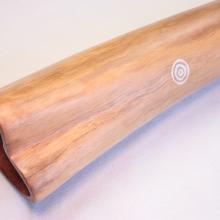
My comments: And yes I am the 'dad' of Didgeridooo Passion. Here I am finally back in instrumental making! After a checkered year in 2024, I decided for 2025 to actively get back into manufacturing. I am lucky to have been able to acquire a batch of raw eucalyptus trunks and not small ones. I would immediately like to point out that I do everything by hand, really! Because in my manufacturing philosophy, the only way to "birth" a didgeridoo is to follow by hand (with a plane, and especially a vastringue) the different strata of the growth of the eucalyptus. So you know when to stop or when to make more chips. Manual work that takes a lot of time, both in the internal and external manufacturing phases as well as in the finishing phase... I therefore start from a trunk ranging from 10 to 15kg to take out a didgeridoo between 3 to 4kg... Concerning the mouthpieces, I shape for each instrument an attached mouthpiece in wood such as ash, elm, pear, walnut, boxwood or others in order to ensure optimal comfort but above all the stability of the instrument. For the interior treatment, I use ecopoxy resin (high quality biosourced epoxy resin) to ensure the stability of the instrument over time. I inlay a boulder opal on each instrument in the place that seems most appropriate to me, often where the didg has a panel hole or where termites have made an air hole. And for the exterior finish, I use a hard oil in several layers to obtain a more natural and satin finish, far from the epoxy finish which is much too glossy for my taste.
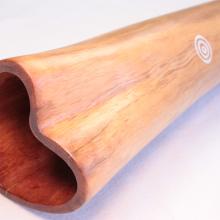
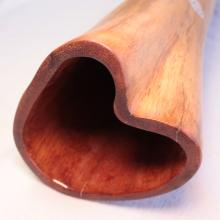
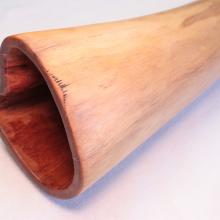
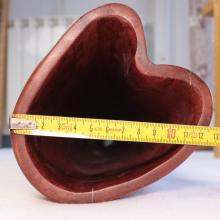
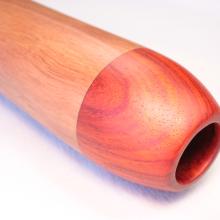
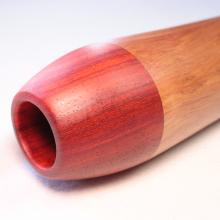
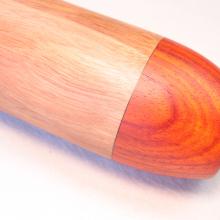
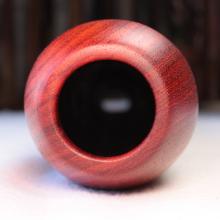
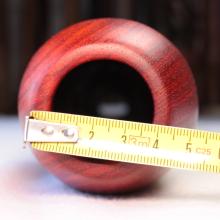
Didg Characteristics : It's such a pleasure to start manufacturing again, and as the saying goes, it's like a bike, you never forget it ^^ Padouk mouthpiece. This trunk was one of the largest I had in stock, more than 20kg at the start... to produce a 4.2kg instrument! Column start opened to 5.1cm. To be precise, the white marks present on the bell are cracks that are of course filled. There was paint on the outside of the trunk to prevent cracks, when sanding I was unable to remove the paint that had seeped into the cracks. When shaping the outside there was an area that was too thin, which I preferred to remove to make a resin inclusion with real pieces of Lightning Ridge crystal opal. A hell of a template pfffffiuuu I'm a fan!
- Shipping costs are free! (only for France)
- Free carrying case!
Classification
This scale is the result of an air column/bell start ratio If we divide the diameter of the bell with that of the beginning of the air column we get a number between 1.5 and 3.5. We can classify all the didgeridoos in 4 large families. Each family groups the instruments with a similar character, simply based on the overall shape of the air column (conical/cylindrical) and on the diameter of the column (wide/narrow). The result is a simple and very reliable reading grid, making it easier to search and purchase on line.
The diameters are measured with a caliper, start of the air column after the mouthpîece. This ratio is very reliable for a didg having a air column with a 'smooth' internal work, in the case of a hollowed eucalyptus instrument it give an approach of the instrumental character.
Kurungaï
French maker of "Kurungaï" didgeridoos
Who am I?
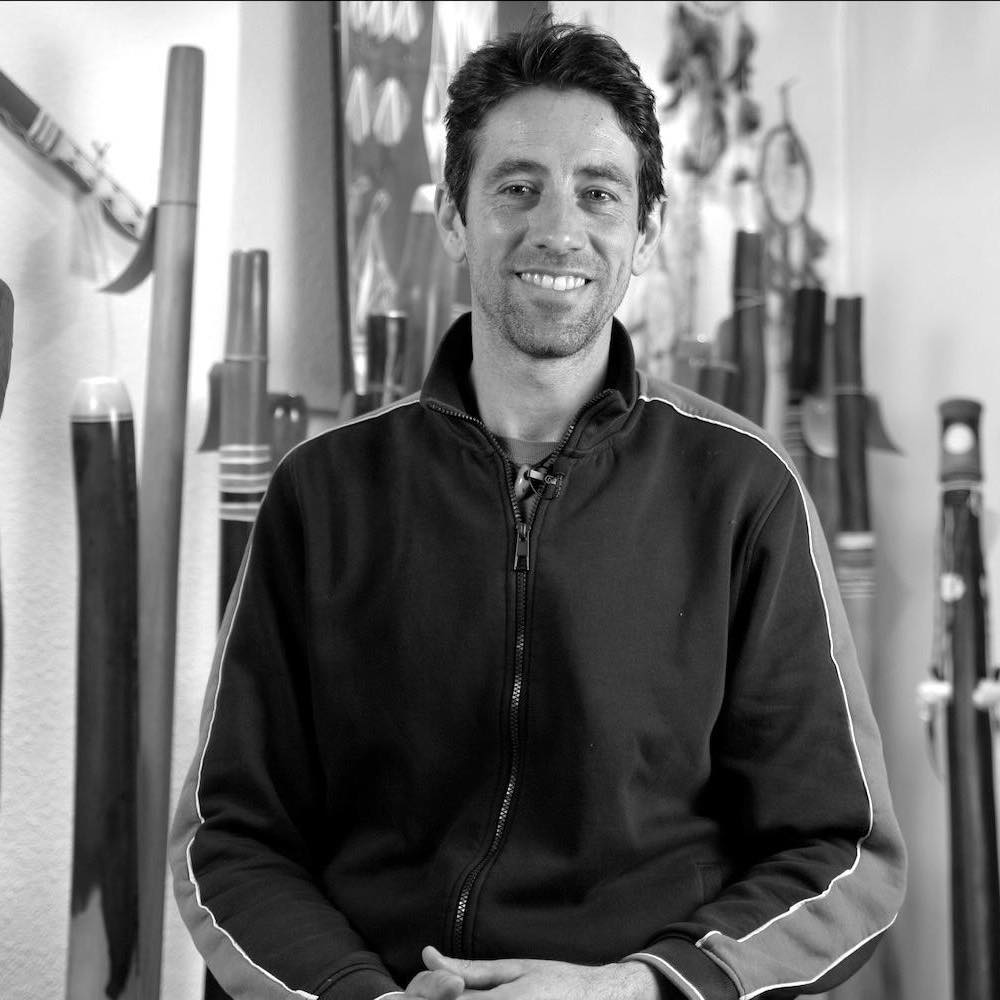
My name is Grégory Zwingelstein and, yes, I am indeed the manager of Didgeridoo Passion. Since 2010 I have combined my passion for the didgeridoo with woodworking, to provide after-sales service for every instrument and, for example, to make custom mouthpieces. Back then I was already making a few instruments. I learned the traditional way of making yidakis from Aboriginal people in Australia, and in the past I have run many making workshops with Bruce Rogers.
All these experiences, along with the hundreds of didgeridoos from all backgrounds that have passed through my hands, have taught me how to make good use of the resources of Australian nature and get the best out of a termite-hollowed eucalyptus trunk. Most of the trunks I use are harvested in autumn, when the sap is no longer active in the trees. They are cut with the permission of the state government, then dry for at least six months before being worked.
How do I make my didgeridoos?
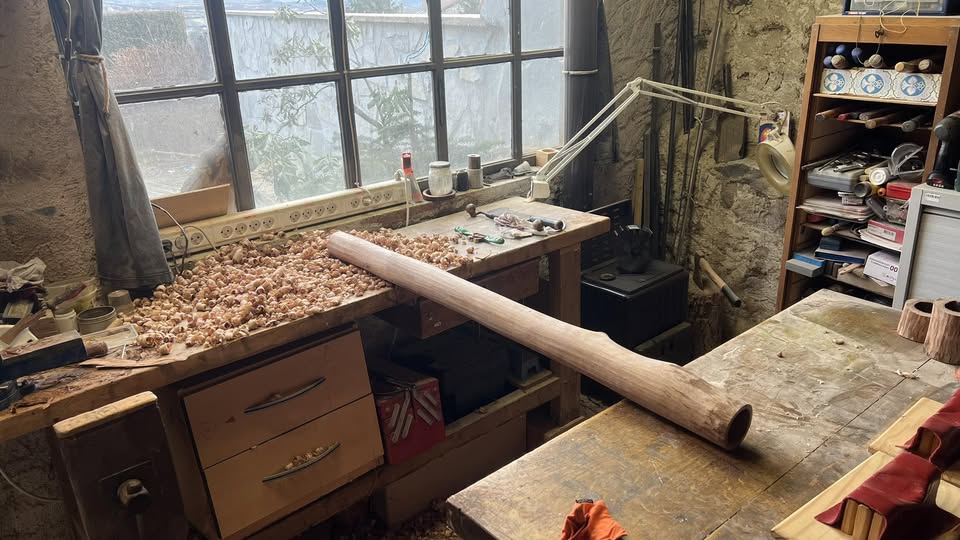
I want to make it clear right away that a large part of the work is done by hand! In my making philosophy, the only way to bring a didgeridoo to life is to follow by hand, with a drawknife and above all a spokeshave, the different growth layers of the eucalyptus. That is how you know when to stop and when to keep taking off shavings. It is manual work that takes a lot of time, for the inside, the outside and the finishing… I start from a trunk of 10 to 15 kg to end up with a didgeridoo of 3 to 4 kg.
For the mouthpieces, I shape a separate wooden mouthpiece for each instrument, in ash, elm, pear, walnut, boxwood or other woods, to ensure optimal comfort and above all the instrument's stability. For the inside, I use Ecopoxy resin (a high-quality bio-based epoxy resin), which keeps the instrument stable over time. For the outside finish, I apply a hard oil in several coats, for a more natural, satin look, far from the epoxy finish, which is much too glossy for my taste.
What does my logo mean?
I did not choose this logo by chance. It has several meanings, but the main one is coming together.