
Mago
The mago is another kind of "traditional" didgeridoo, made from a eucalyptus hollowed out by termites.
What is a mago?
The mago is a type of traditional didgeridoo from western Arnhem Land. The word is used by several language groups whose country stretches from the Gunbalanya (Oenpelli) community in the west to the Blyth River east of Maningrida, and south towards Katherine.
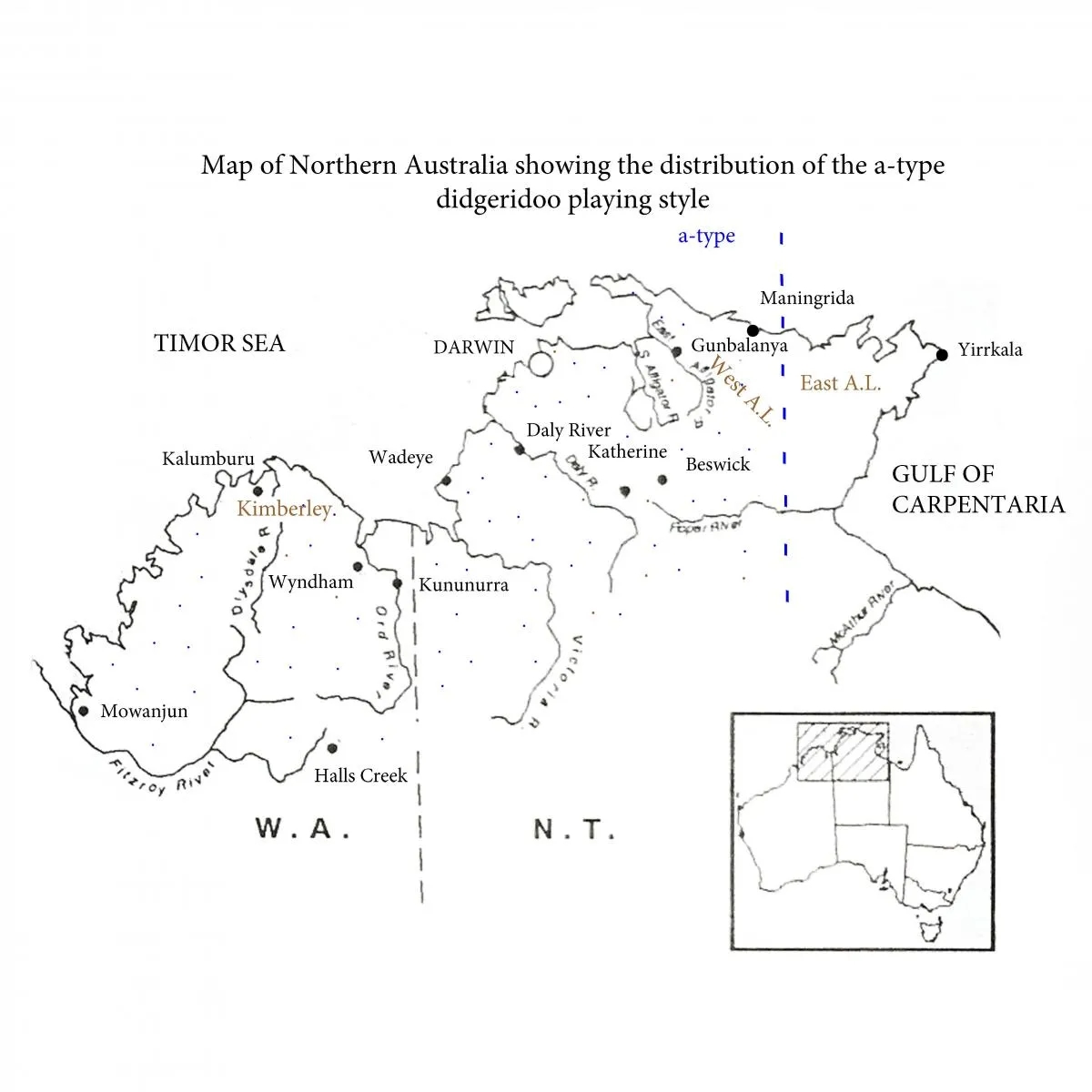
The word "mago" has become a generic name commonly used for the instruments played in this region. Its use even extends beyond western Arnhem Land: many didgeridoo enthusiasts use it for traditional didgeridoos made outside north-east Arnhem Land, that is, all Top End didgeridoos that are not yidakis.
The name "mago" is most often used for shorter, cylindrical traditional instruments.
This style is characterised by a drone without any "toot" (the trumpet sound), and by melodic overtones created by the player's voice over the drone. Mago-type didgeridoos also tend to have an open inner bore which, combined with the use of the vocal cords, gives their sound a melodic character.
Like other traditional instruments, the mago is used as rhythmic accompaniment for traditional songs.
Care: like the yidaki, the mago needs regular, preventive care to last a lifetime! To avoid cracks and give the wood time to return to a proper moisture level, I recommend reading the Advice and Accessories pages.