
The Mago is another kind of "traditional" didgeridoo, made of eucalyptus and termite.
The Mago, but what is it?
The mago is a type of traditional didgeridoo from western Arnhem Land. The word is used by members of various language groups whose territory extends from the Gunbalanya (Oenpelli) community in the west, to the River Blythe east of Maningrida and south towards Katherine.
The word mago has become a generic name commonly used for instruments played in the region. Moreover, the use of the word extends beyond the western region of Arnhem Land, as many didgeridoo enthusiasts use the term to refer to traditional didgeridoos made outside of northeastern Arnhem Land—that is, all didgeridoos made in the Top End that are not yidaki.
The name mago is commonly used to identify traditional instruments with shorter, cylindrical shapes.
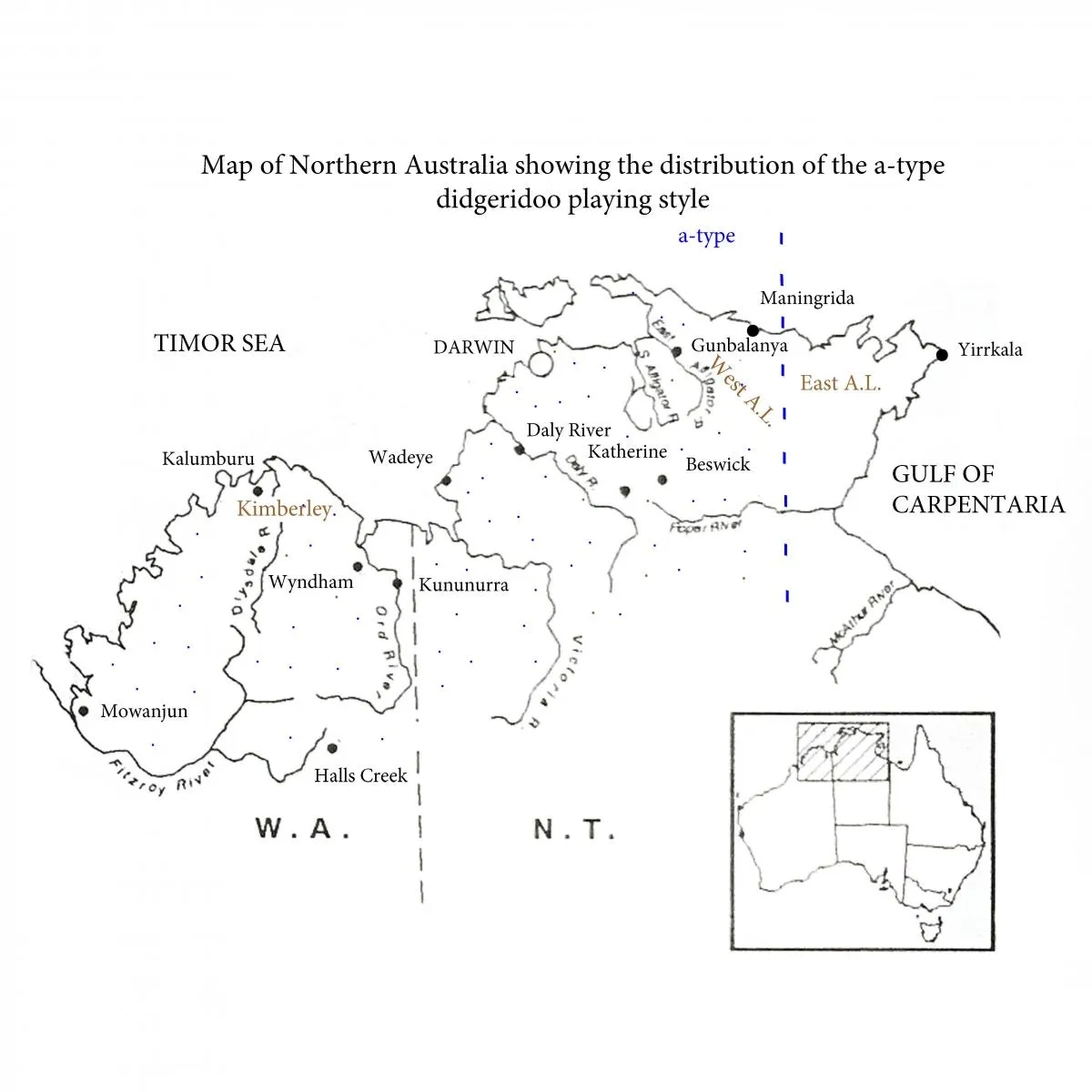
The characteristics of this style are the drone, devoid of any "toot" or trumpet-like sound, and the melodic harmonic generated by the human voice playing over the drone. Furthermore, mago-type didgeridoos tend to have an open internal column which, combined with the use of the player's vocal cords, lends a melodic character to their sound.
Like other types of traditional instruments, the mago is used as rhythmic accompaniment for traditional songs.
Maintenance: As with yidakis, the mago requires regular, preventative maintenance to last a lifetime! To avoid cracks and allow the wood time to recover its proper moisture content, we recommend referring to the advice and accessories pages.