
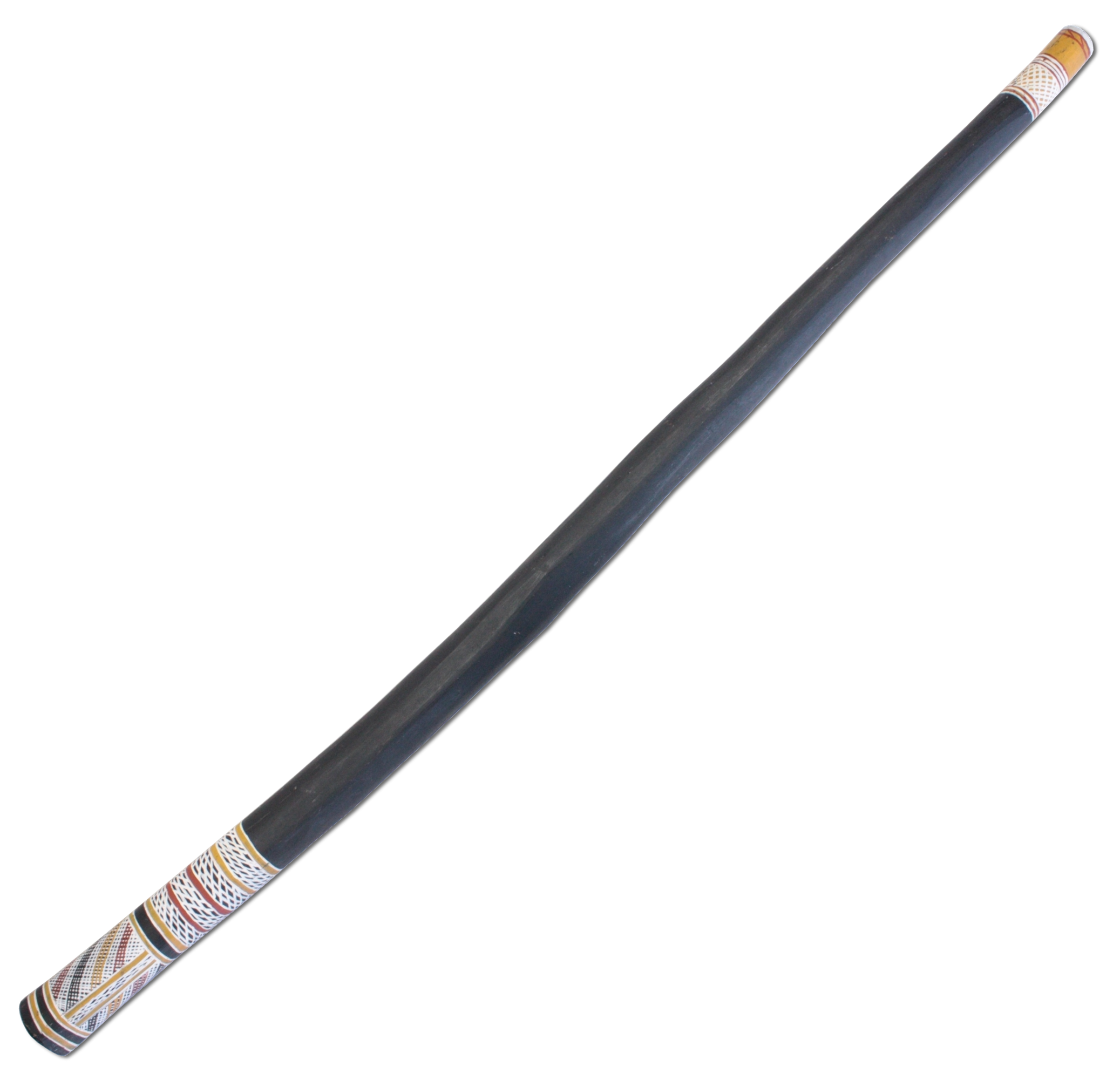
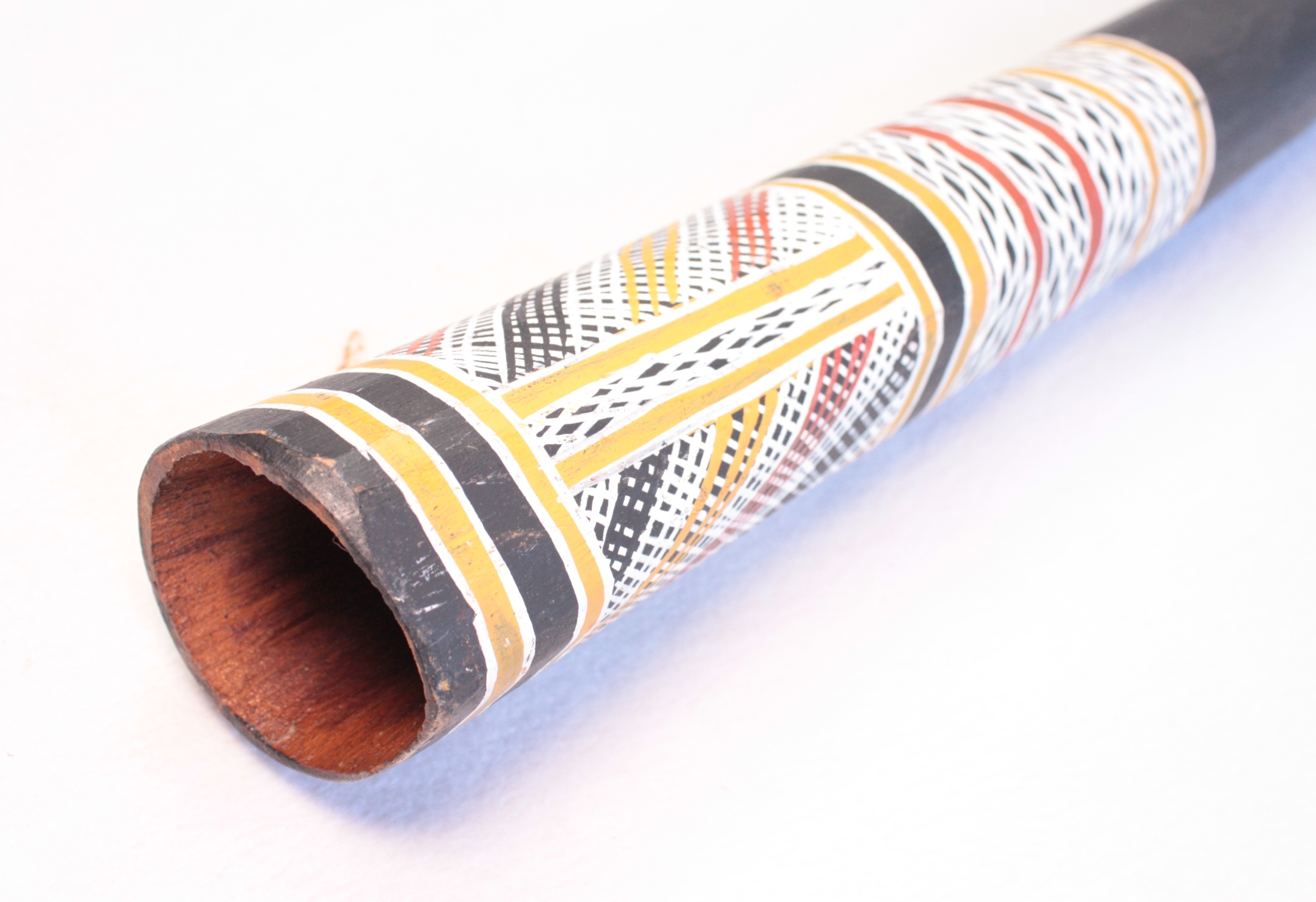
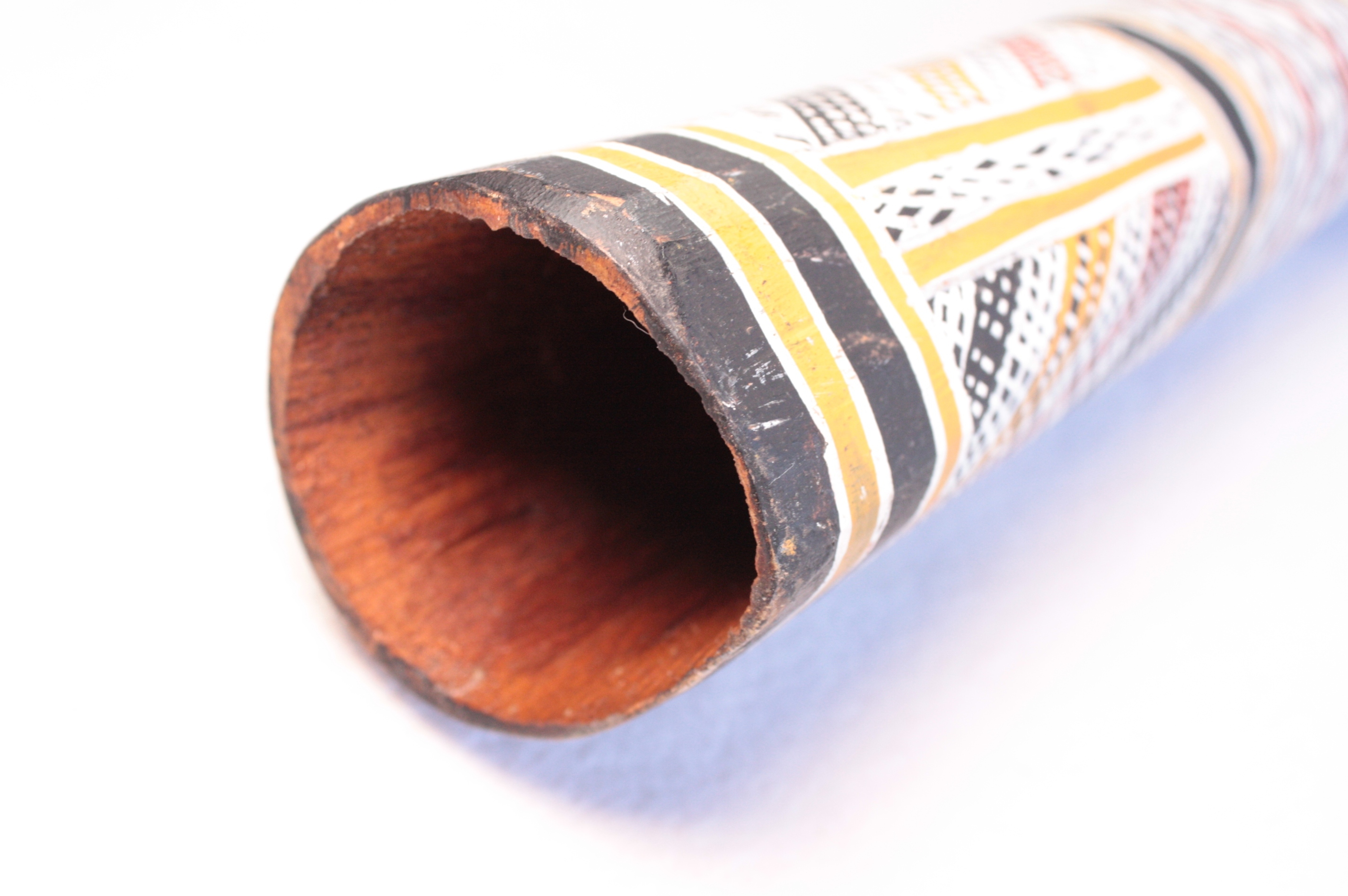
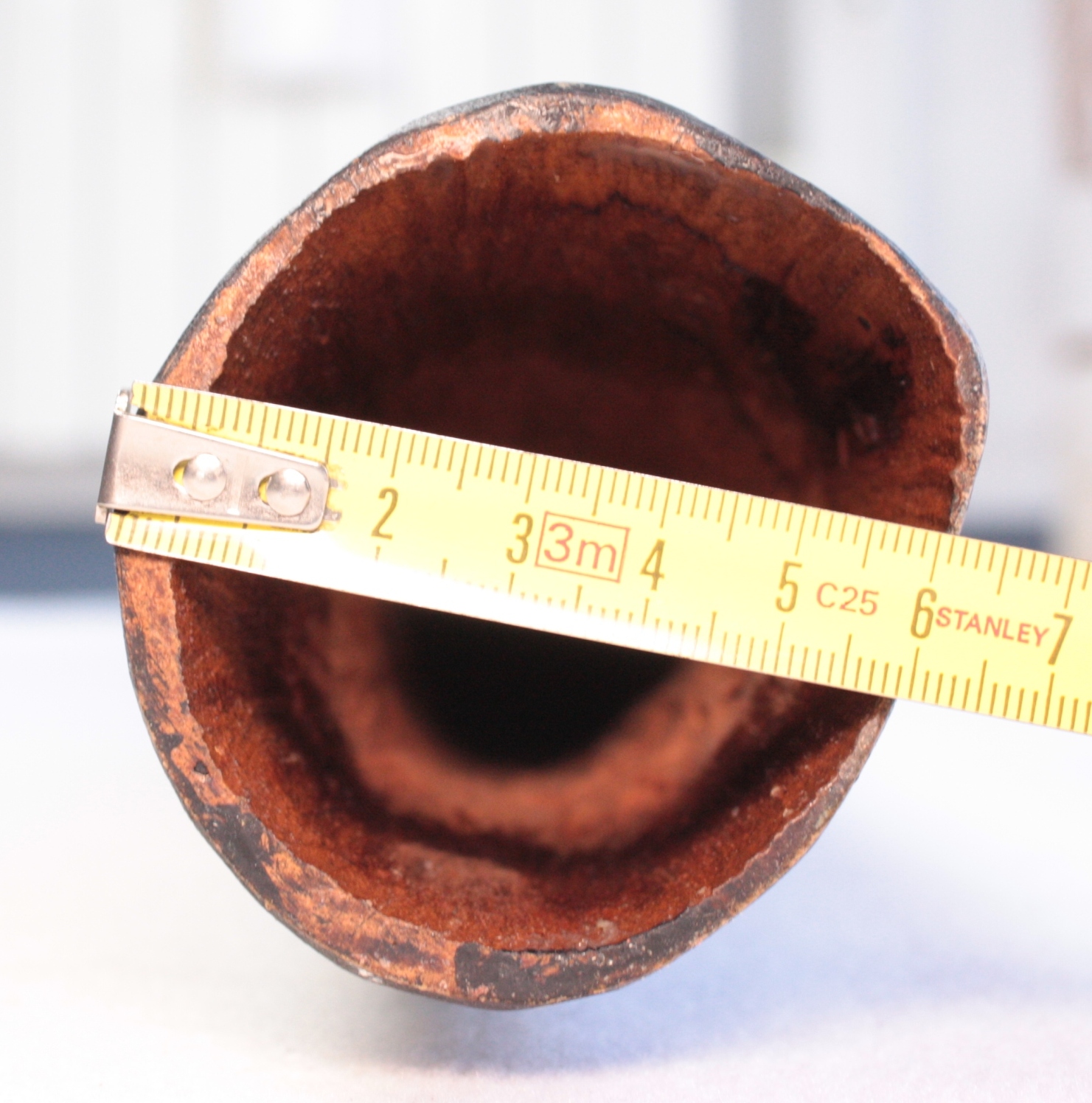
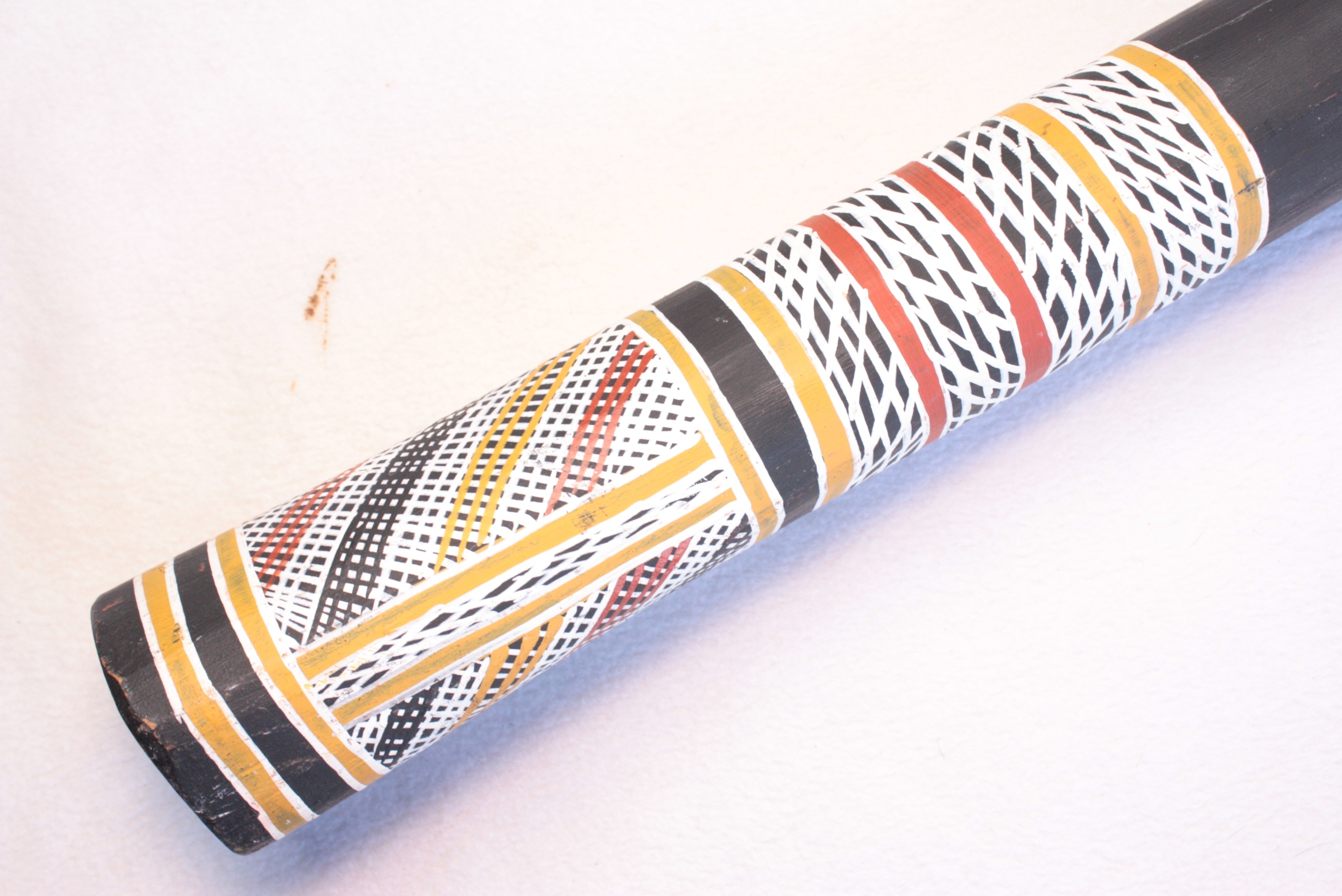
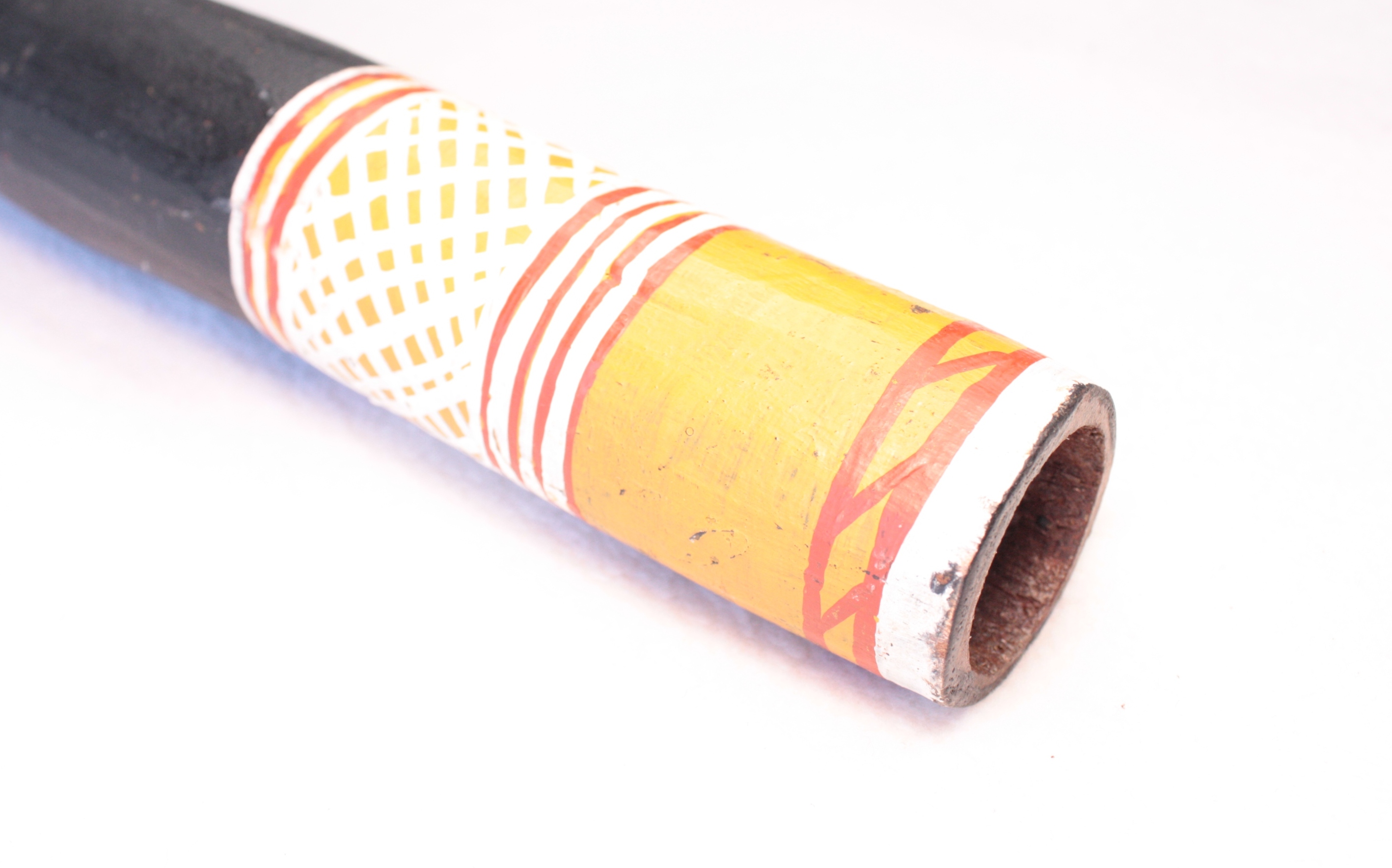
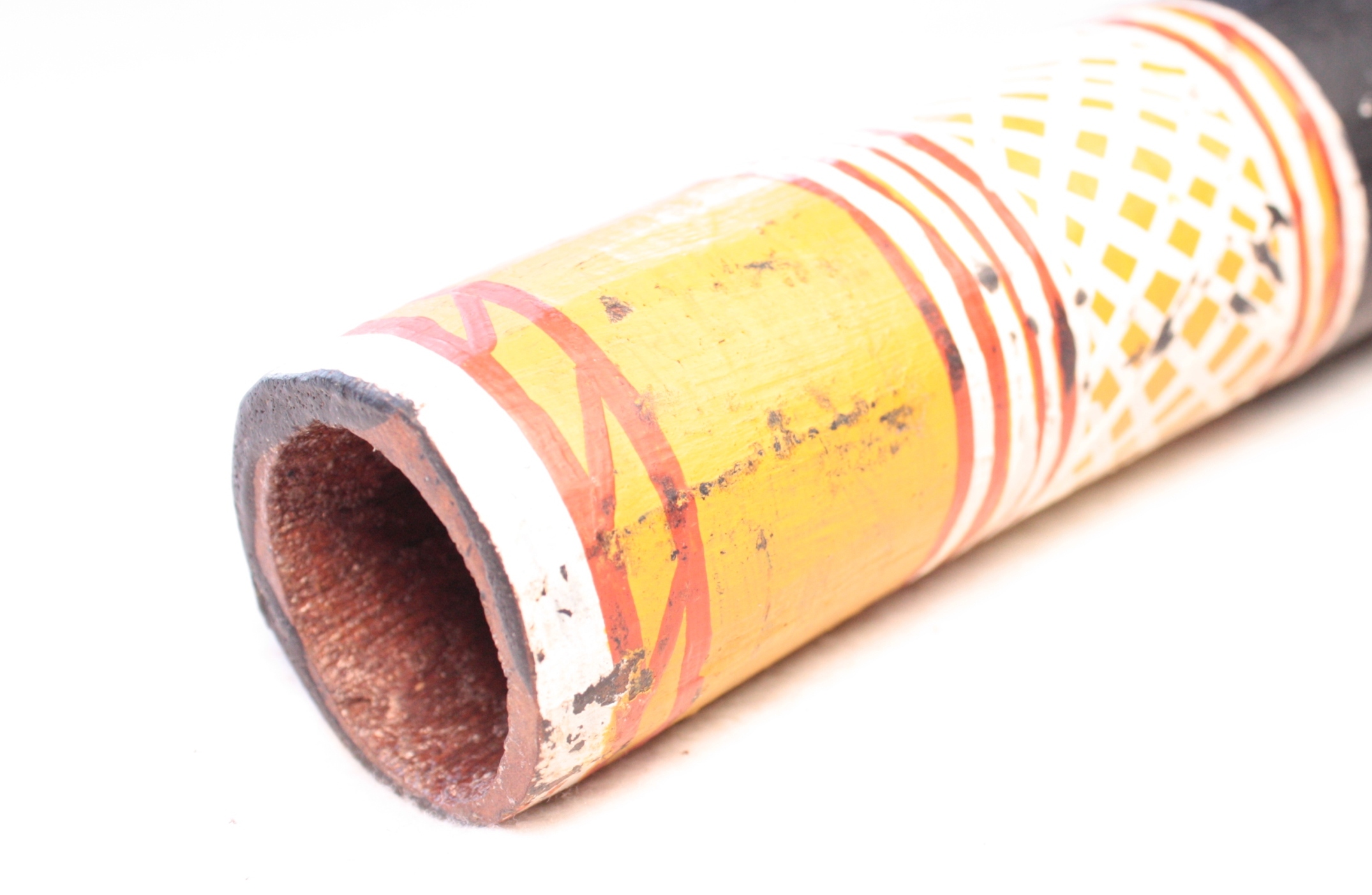
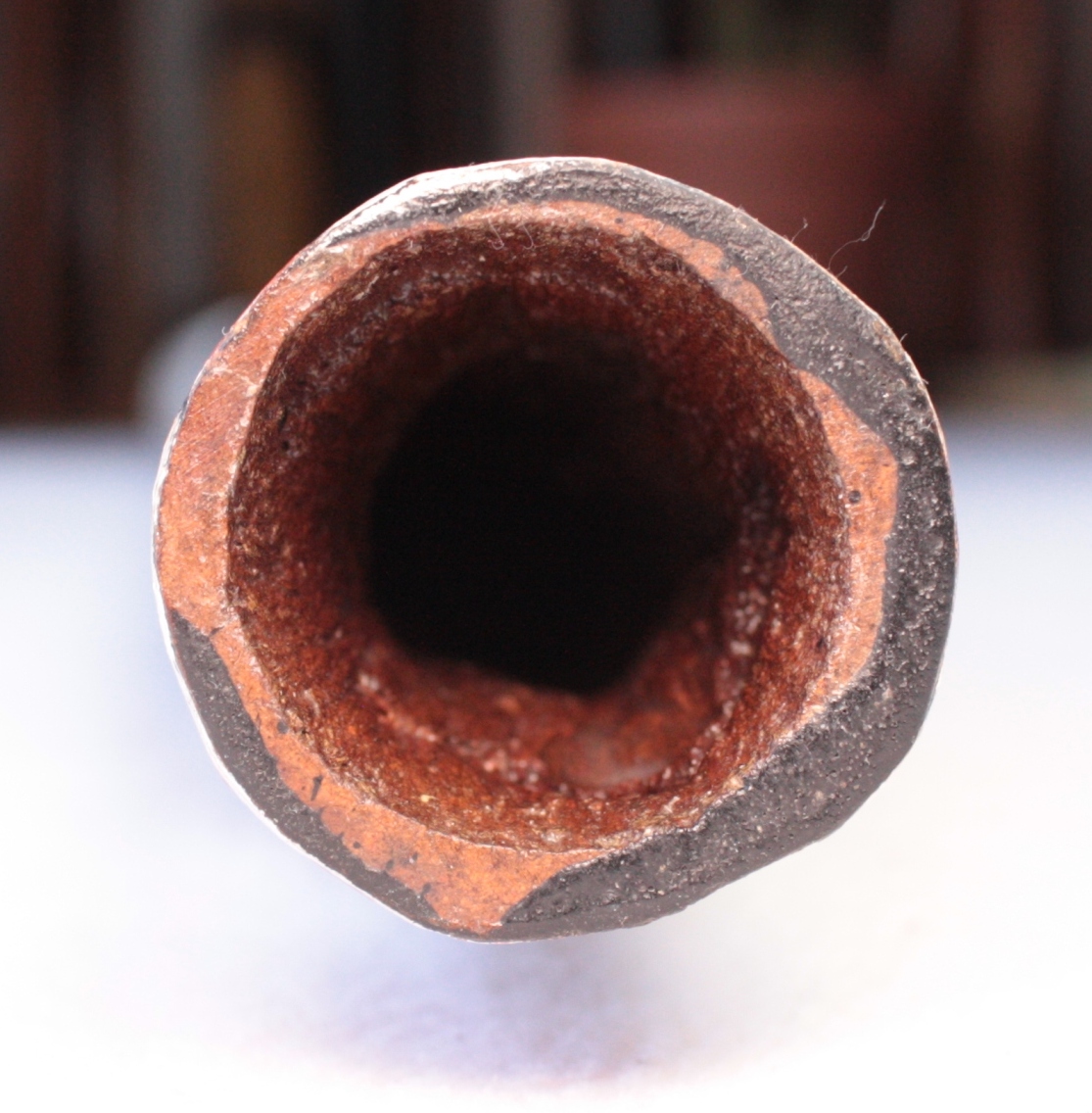


Yidaki Mirrwatnga Munyarryun 4025
- The certificate of authenticity of the yidaki will be attached to the instrument.
- Shipping costs are free! (only for France)
- The carrying case is free!
Classification
This scale is the result of an air column/bell start ratio If we divide the diameter of the bell with that of the beginning of the air column we get a number between 1.5 and 3.5. We can classify all the didgeridoos in 4 large families. Each family groups the instruments with a similar character, simply based on the overall shape of the air column (conical/cylindrical) and on the diameter of the column (wide/narrow). The result is a simple and very reliable reading grid, making it easier to search and purchase on line.
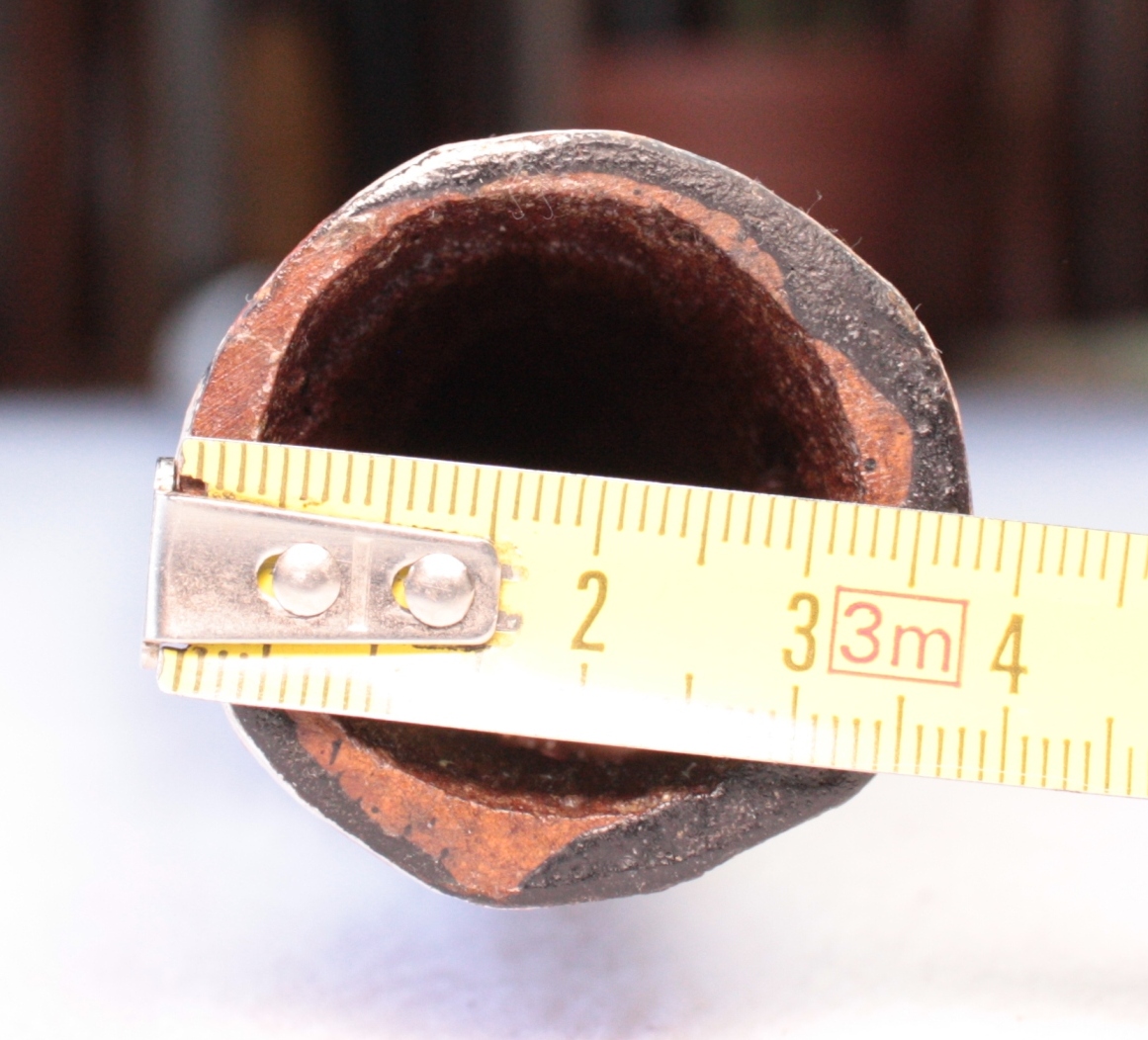
The diameters are measured with a caliper, start of the air column after the mouthpîece. This ratio is very reliable for a didg having a air column with a 'smooth' internal work, in the case of a hollowed eucalyptus instrument it give an approach of the instrumental character.
Yidaki
The yidaki is the didgeridoo known as "traditional" for the Yolgnus, made of eucalyptus and termite.
Yidaki, but what is it?
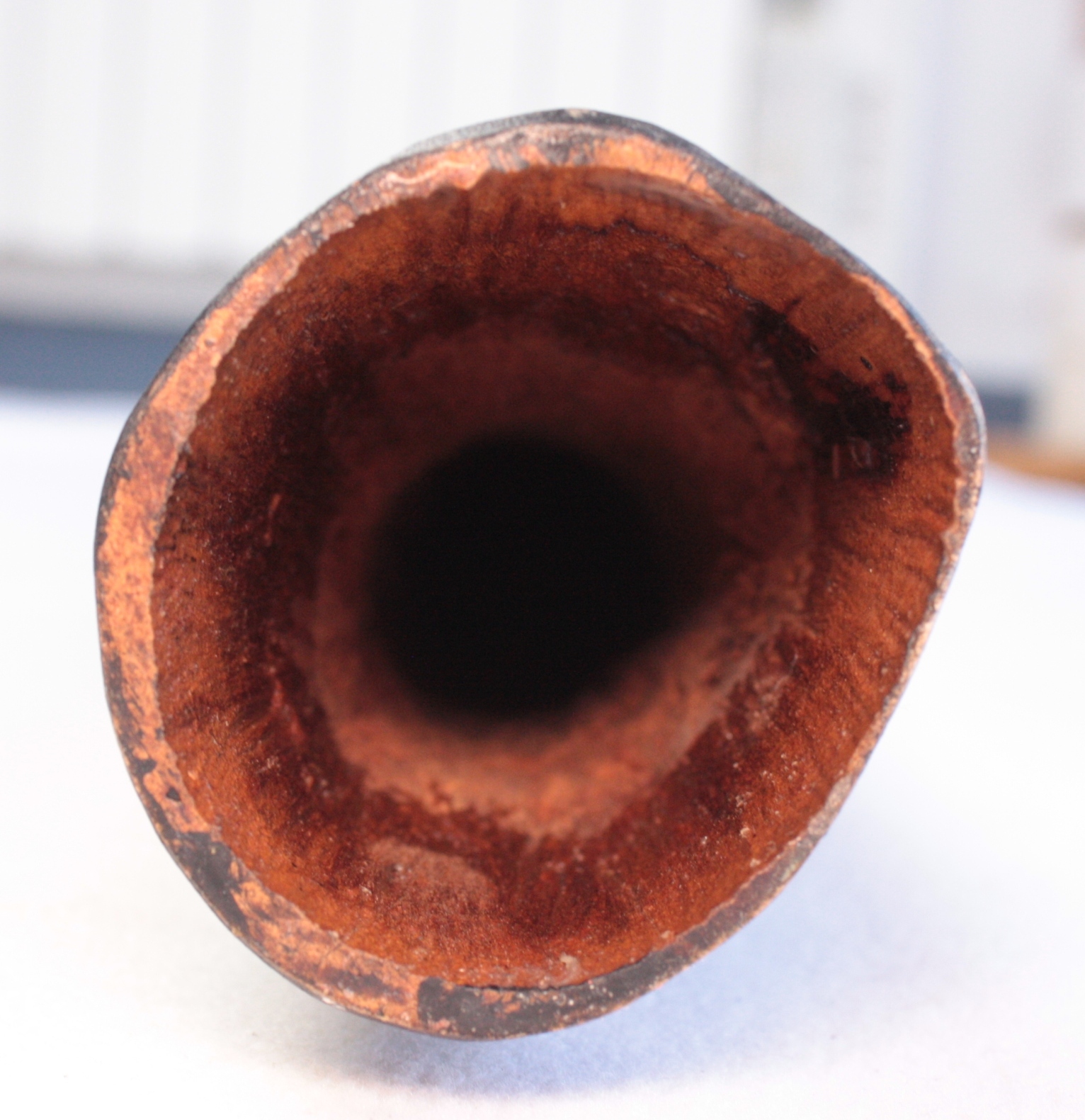
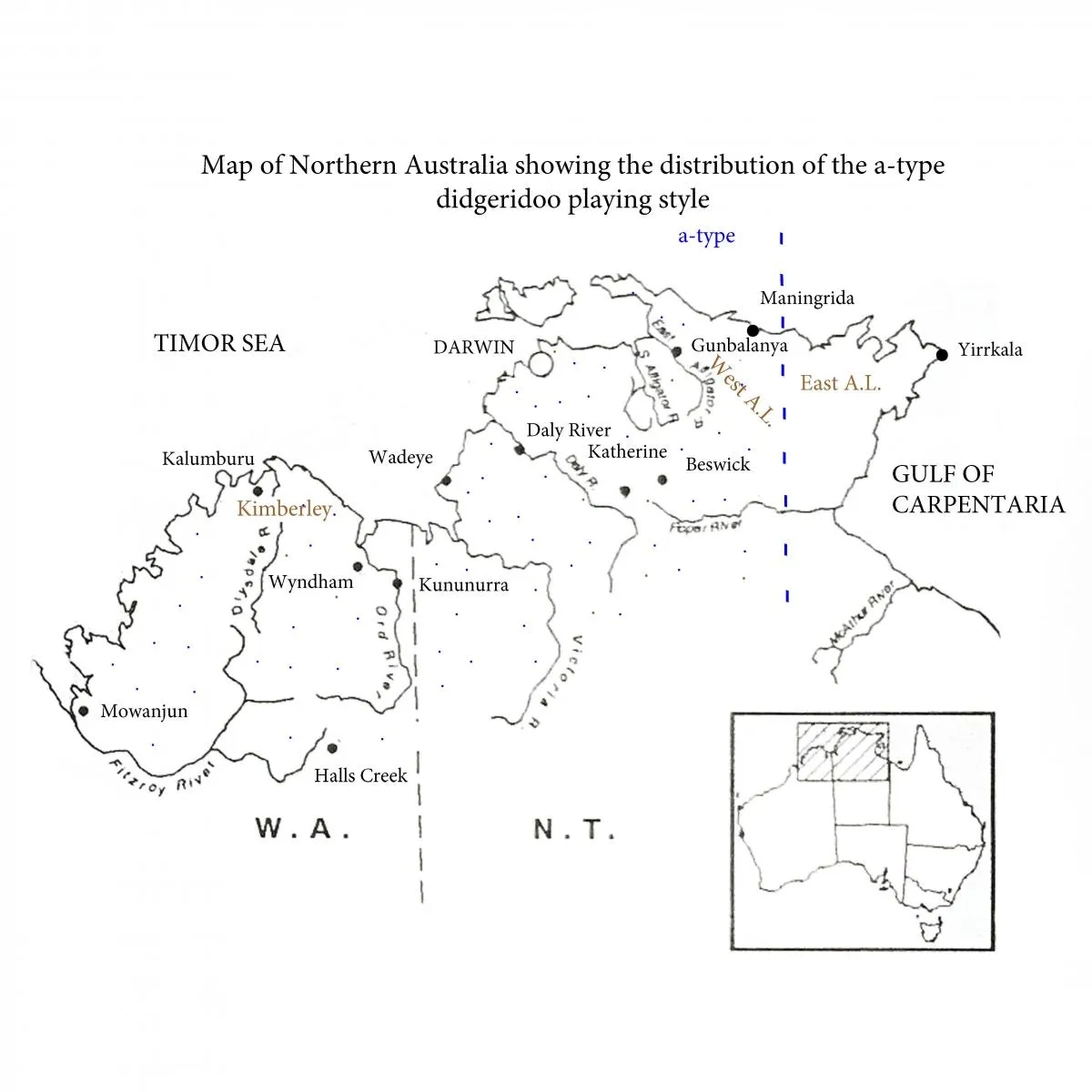
The yidaki is the so-called "traditional" didgeridoo for the Yolgnu people. It is made using traditional methods by an experienced Aboriginal didgeridoo maker from Arnhem Land (northeast of the Northern Territory) and is usually painted with clan motifs. What often distinguishes a yidaki from a didgeridoo is the configuration of the air column hole. The inside of a yidaki is very often narrower than that of a didgeridoo and very simply shaped. This produces a raw, compressed sound, resulting in a very responsive instrument with easily accessible hoots.
If you choose to buy a Yidaki from Didgeridoo Passion, you are guaranteed to receive a high-quality, authentic product. The Yidakis sold by Didgeridoo Passion come from the Yirrkala Community and the Buku-Larrnggay Mulka Arts Centre. They are authentic traditional instruments, made by Aboriginal didgeridoo makers, and imported directly from Arnhem Land, Australia. Each Yidaki comes with a certificate of authenticity and a biography of the maker!
How are they made?
The vast majority of yidaki trees in the northeastern Arnhem lands are made from the following eucalyptus trees:
- “Gadayka” “Stringybark” (eucalyptus tetrodonta)
- “Gungurru” “Woolybutt” (eucalyptus miniata)
- “Badawili” “Bloodwood” (eucalyptus ferruginea)
Trees are naturally hollowed out by termites. The techniques for finding and making the yidaki vary from one artist to another. The didgeridoo maker begins by removing a piece of bark from the tree and then striking it with the end of an axe to hear if it sounds hollow. Experienced didgeridoo makers can thus indicate if the cavity is suitable for a yidaki and choose the best place to cut the tree. The tree is then cut again to find the appropriate size for the mouthpiece. The ideal mouthpiece size is approximately 30 to 35 mm (inner diameter). Sometimes the mouthpiece may exceed these measurements. If this is the case, the artist believes that the yidaki will have a good sound with a little wax.
The Buku-Larrnggay Mulka Museum and Art Center
The Buku-Larrnggay Mulka Art Centre is located in the town of Yirrkala, a small Aboriginal community in the Northeast of the Northern Territory, approximately 700km east of Darwin.
Yirrkala Arts was officially established in 1975. In the 1960s, Narritjin Maymuru created his own gallery near the beach, from which he sold Aboriginal art that now graces many major museums and private collections. He is among the founding art centers of the museum. His vision of selling Yolngu art, which began with a shelter on a beach, has now become a thriving business. As of 2005, the center was putting over one million dollars into the pockets of community artists each year.
The former Yirrkala hospital and clinic, where many artists were born, was transformed into the "craft shop." Over the years, there have been numerous additions and renovations. The current center is an impressive building, a far cry from its early days. Modifications include: a museum (1988); an additional screen printing workshop and galleries (1996); the Yirrkala Church Panels annex (1998); and the multimedia center (2007).
The Buku-Larrnggay Mulka Museum houses a collection of works specially created in the mid-1970s and early 1980s by elders. This provides insight into the structure of Yolngus kinship ties. The jewels of the collection are the two four-meter-high Yirrkala Church Panels (1962-3), which have been described as the most important paintings in Australian art ever made.
Maintenance: A Yidaki requires regular preventative maintenance to last a lifetime! To avoid any cracks and allow the wood time to recover a proper moisture content, we advise you to refer to the advice and accessories pages.