


Yidaki Barrupu Yunupingu 2577
Note : Eb / Mi bémol - 1er Hoot : G / Sol
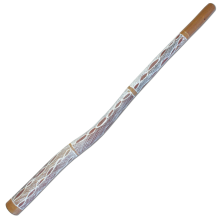
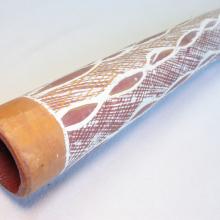
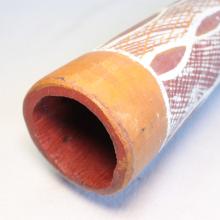
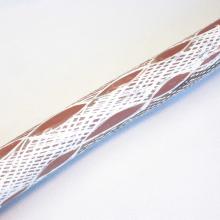
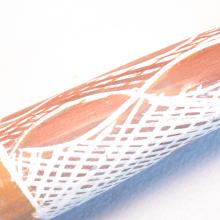
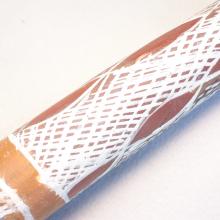
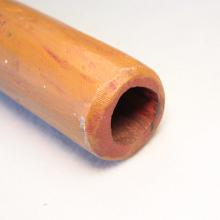
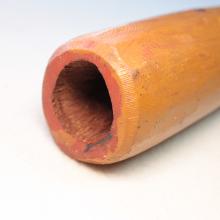
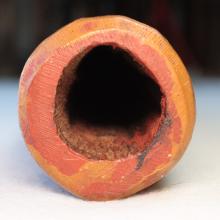
In short: A rare yidaki from 2009, in stringybark, in E flat (Eb), painted in ochre by Barrupu Yunupingu: an extremely fine painting depicting Gurtha, the "ancestral fire".
This yidaki: Barrupu was a highly renowned artist who painted on only a few yidakis. She has since passed away. This yidaki dates from 2009: it is a very rare piece. Its extremely fine ochre painting depicts Gurtha, the "ancestral fire".
Gurtha, the ancestral fire: This is no ordinary fire: it is of supernatural intensity, so powerful that it forever transforms the land it touches. This work embodies the miny'tji of the Gumatj clan, the clan's sacred design, specific to this place.
Its diamond pattern represents fire: the red flames, the smoke and white ash, the black charcoal and the yellow dust. Fire burns away lies and leaves only the remains of truth.
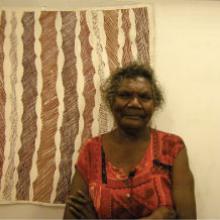
Barrupu Yunupingu: Barrupu (Rita) Yunupingu is the daughter of Munggurraway. Her brothers and sisters include Galarrwuy and Mandawuy. Her mother, Bunay Wanambi, of the Marrakulu clan, looked after the cows for the Yirrkala mission. Barrupu always lived in Yirrkala. As a child, she attended the Yirrkala mission school with her father and family.
She trained and worked as a nurse for many years, until it closed in 1975. From 1996, with her closest sister, Nyapanyapa, she worked as an artist at Buku-Larrnggay. Her output of bark paintings increased in 2007.
The growing reputation of Nyapanyapa's bark paintings and the successes that followed in 2008 were a catalyst for the development of her own painting style, which acquired a signature and aroused keen interest within her art centre.
In 2008 and early 2009, Barrupu worked on her painting almost daily at the art centre, in the very place where she had worked as a nurse in the 1960s and 1970s. Since her death in 2012, her works have been highly sought after.
The collection: Following my merger with AboriginalArts UK, I was able to take over the whole collection of Bear, its owner. I was extremely lucky: these yidakis date from the best years of making we have known. Do appreciate how special and rare they are.
Care: A yidaki needs regular, preventive care to last a lifetime. To avoid cracks and give the wood time to recover a good moisture level, see my care advice.
- The yidaki's certificate of authenticity and the maker's biography will be included with the instrument.
- Shipping is free! (France only)
- The carry bag is free
Classification
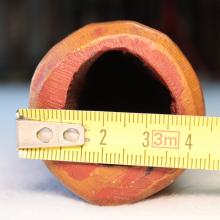
This scale is the result of an air column/bell start ratio If we divide the diameter of the bell with that of the beginning of the air column we get a number between 1.5 and 3.5. We can classify all the didgeridoos in 4 large families. Each family groups the instruments with a similar character, simply based on the overall shape of the air column (conical/cylindrical) and on the diameter of the column (wide/narrow). The result is a simple and very reliable reading grid, making it easier to search and purchase on line.
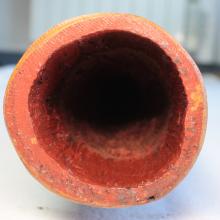
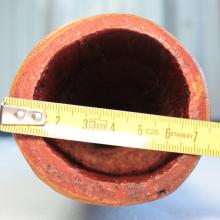
The diameters are measured with a caliper, start of the air column after the mouthpîece. This ratio is very reliable for a didg having a air column with a 'smooth' internal work, in the case of a hollowed eucalyptus instrument it give an approach of the instrumental character.
Yidaki
The yidaki is the "traditional" didgeridoo of the Yolŋu, made from a eucalyptus hollowed out by termites.
What is a yidaki?
The yidaki is the so-called "traditional" didgeridoo of the Yolŋu. It is made using ancestral methods by an experienced Aboriginal maker from Arnhem Land (in the north-east of the Northern Territory), and it is usually painted with the designs of the maker's clan.
What most often sets a yidaki apart from a didgeridoo is the shape of the air column. The inside of a yidaki is generally narrower and hardly reworked at all. The sound is raw and compressed: the result is a very responsive instrument, with hoots that are easy to reach.
If you choose to buy a yidaki from Didgeridoo Passion, you can be sure of receiving an authentic, high-quality instrument. The yidakis I offer come from the Yirrkala community and the Buku-Larrŋgay Mulka art centre. They are authentic traditional instruments, made by Aboriginal makers and imported directly from Arnhem Land, Australia. Each yidaki comes with its certificate of authenticity and the biography of its maker!
How are they made?
The vast majority of yidakis from north-east Arnhem Land are made from one of these eucalyptus species:
- "Gadayka", Stringybark (Eucalyptus tetrodonta)
- "Gungurru", Woollybutt (Eucalyptus miniata)
- "Badawili", Bloodwood (Eucalyptus ferruginea)
These trees are hollowed out naturally by termites. The techniques for finding and making a yidaki vary from one artist to another. The maker starts by removing a piece of bark, then strikes the trunk with the back of an axe to hear whether it sounds hollow. Thanks to their experience, makers can tell whether the cavity is right for a yidaki, and choose the best place to cut the tree.
The trunk is then trimmed to get the right mouthpiece size. The ideal inner diameter is around 30 to 35 mm. Sometimes the mouthpiece is wider: in that case, the artist considers that the yidaki will sound good with a little wax.
The Buku-Larrŋgay Mulka museum and art centre
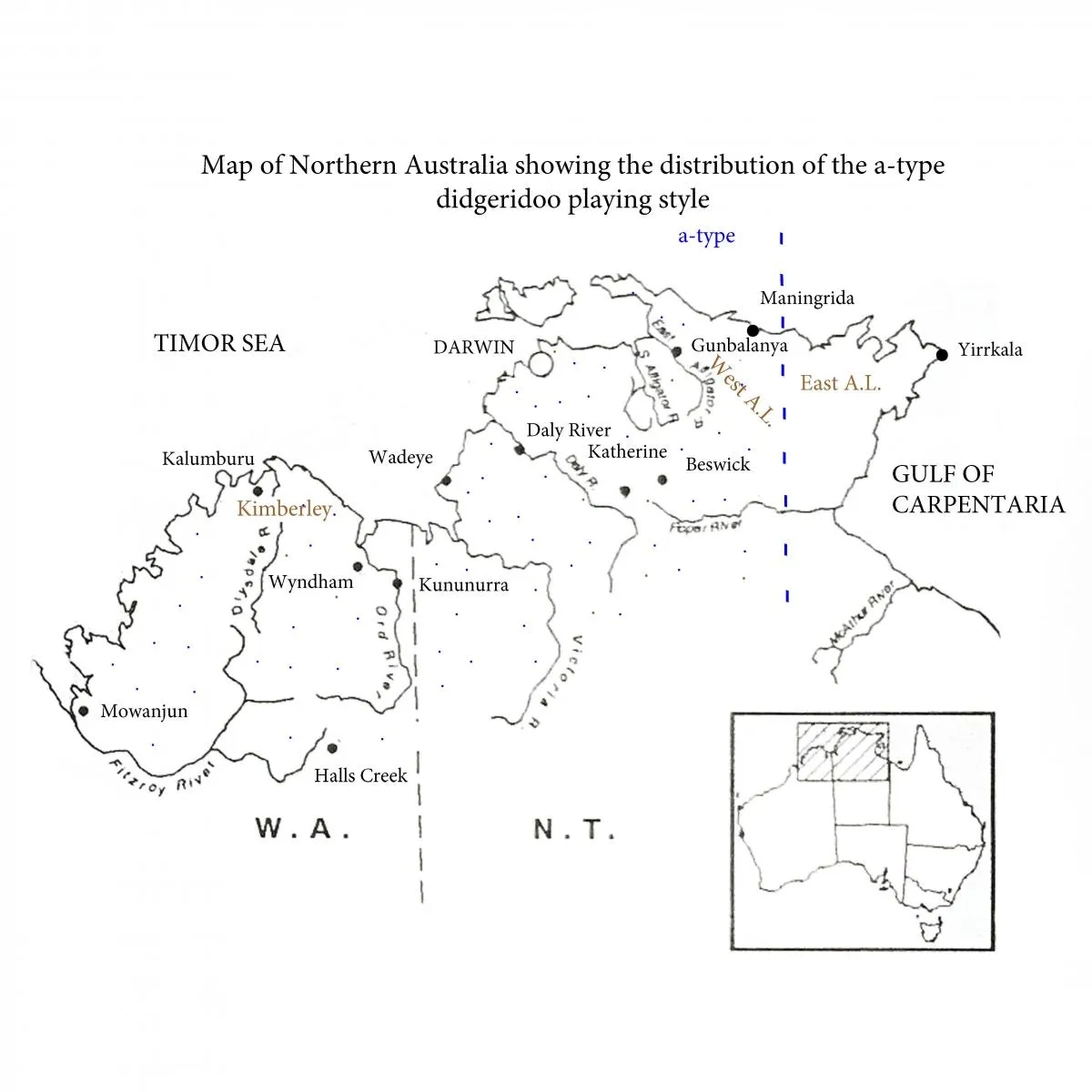
The Buku-Larrŋgay Mulka art centre is located in Yirrkala, a small Aboriginal community in the north-east of the Northern Territory, about 700 km east of Darwin.
Yirrkala Arts was officially founded in 1975. In the 1960s, Narritjin Maymuru had opened his own gallery near the beach, from which he sold Aboriginal art that now graces many major museums and private collections. He is one of the founders of the art centre. His idea of selling Yolŋu art, born under a simple beach shelter, has grown into a thriving business: since 2005, the centre has paid more than a million dollars a year to the community's artists.
Yirrkala's former hospital, where many of these artists were born, was converted into the "craft shop". Over the years the building has been extended and renovated several times, so much so that today's centre bears little resemblance to its beginnings: museum (1988), screen-printing workshop and new galleries (1996), Yirrkala Church Panels annex (1998), multimedia centre (2007).
The Buku-Larrŋgay Mulka museum holds a collection of works created especially by the elders in the mid-1970s and early 1980s. They give an insight into the structure of Yolŋu kinship. The jewels of the collection are the two four-metre-high Yirrkala Church Panels (1962-1963), regarded as among the most important paintings ever made in Australian art.
Care: a yidaki needs regular, preventive care to last a lifetime! To avoid cracks and give the wood time to return to a proper moisture level, I recommend reading the Advice and Accessories pages.