


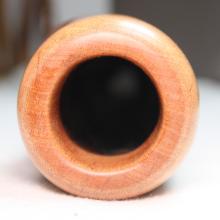


Wix Stix 0440
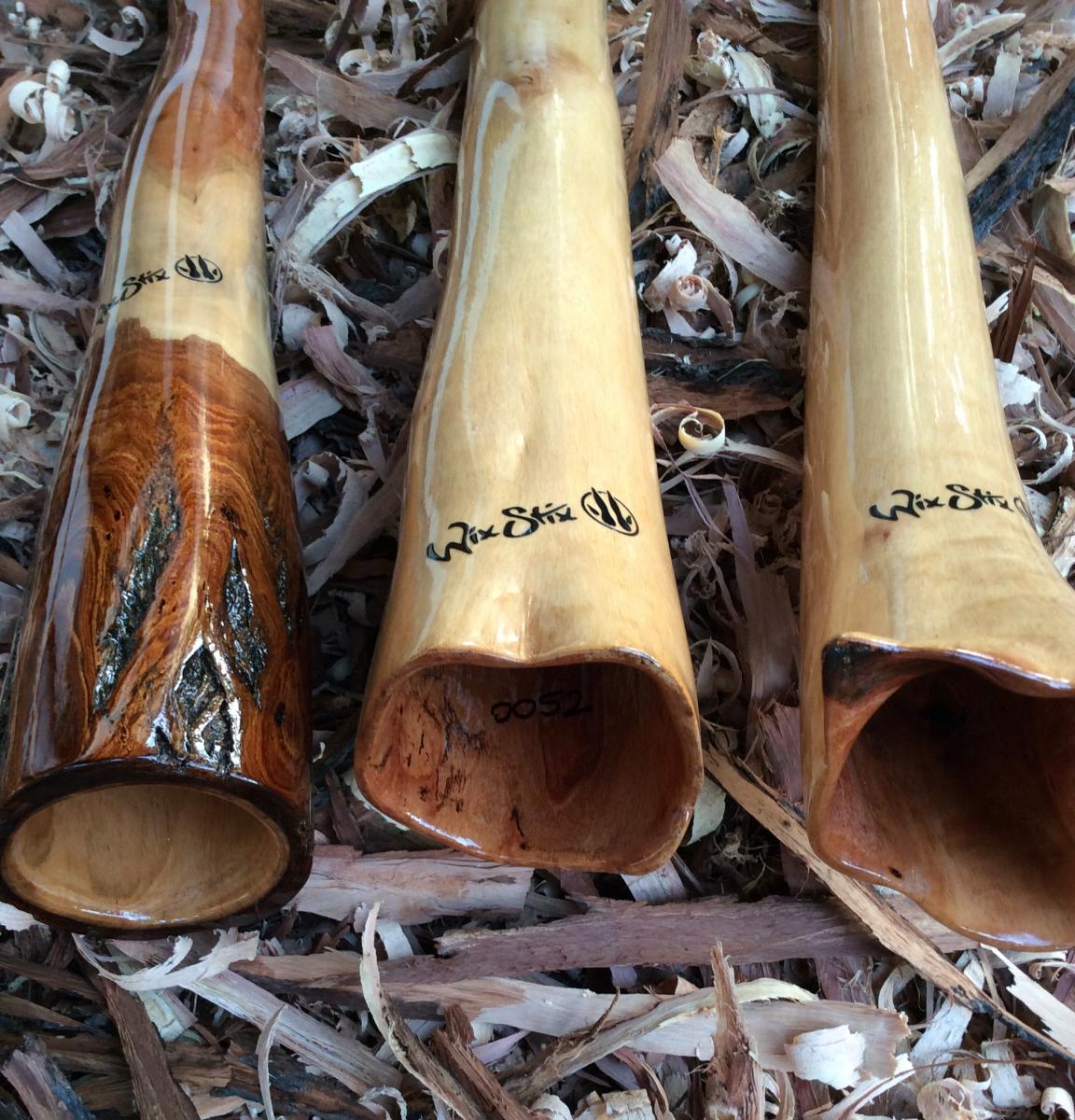
My comments: An enthusiast who takes his time over the making: quality before quantity! Bruce started making didges in the mid-90s, and the passion is just as strong 30 years later! All of Bruce's logs are dried for at least 12 months before being worked. Bruce does not use wax to reduce the size of his mouthpieces. Either the hole is the right diameter, in which case Bruce shapes the mouthpiece naturally, or he fits a mouthpiece insert. A real plus for a really comfortable mouthpiece! Bruce's didgeridoos offer an unbeatable balance of build quality, finish, playability and price.
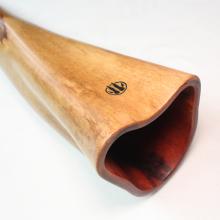
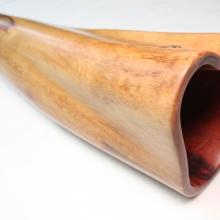
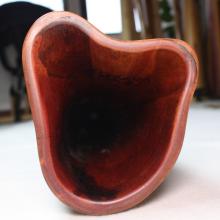
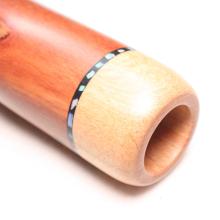
Mouthpiece in Australian tulip oak with inlays of Lightning Ridge opal. An instrument I could play for hours... Perfect toot/drone transition. A nice round toot, just the way I like them!
- Instrument guaranteed for 1 year
- Shipping is free! (France only)
- Didgeridoo Passion also includes the carrying bag free of charge!
Classification
This scale is the result of an air column/bell start ratio If we divide the diameter of the bell with that of the beginning of the air column we get a number between 1.5 and 3.5. We can classify all the didgeridoos in 4 large families. Each family groups the instruments with a similar character, simply based on the overall shape of the air column (conical/cylindrical) and on the diameter of the column (wide/narrow). The result is a simple and very reliable reading grid, making it easier to search and purchase on line.
The diameters are measured with a caliper, start of the air column after the mouthpîece. This ratio is very reliable for a didg having a air column with a 'smooth' internal work, in the case of a hollowed eucalyptus instrument it give an approach of the instrumental character.
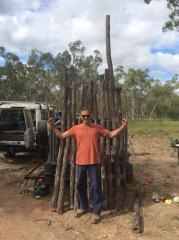
Bruce Wix Stix
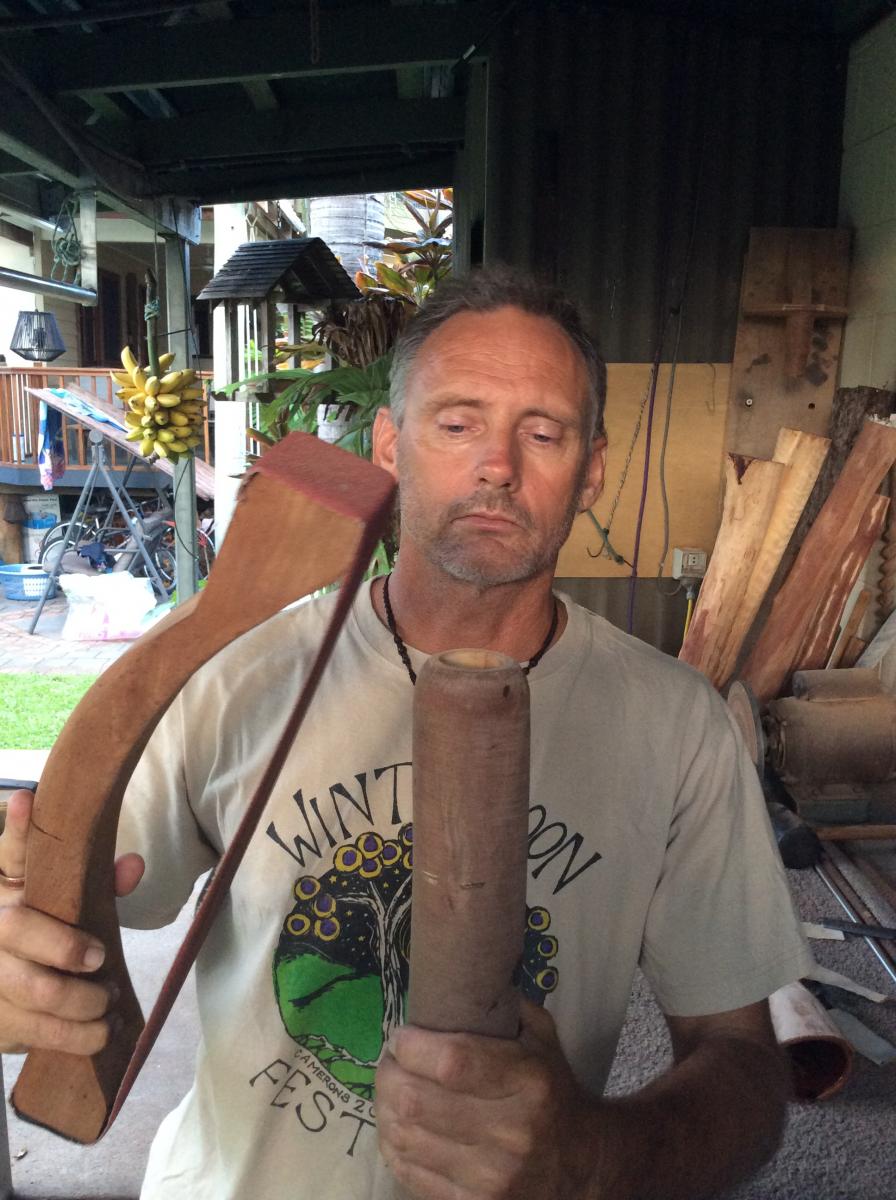
Bruce Wix, maker of Wix Stix didgeridoos
A passionate maker who takes his time: quality before quantity!
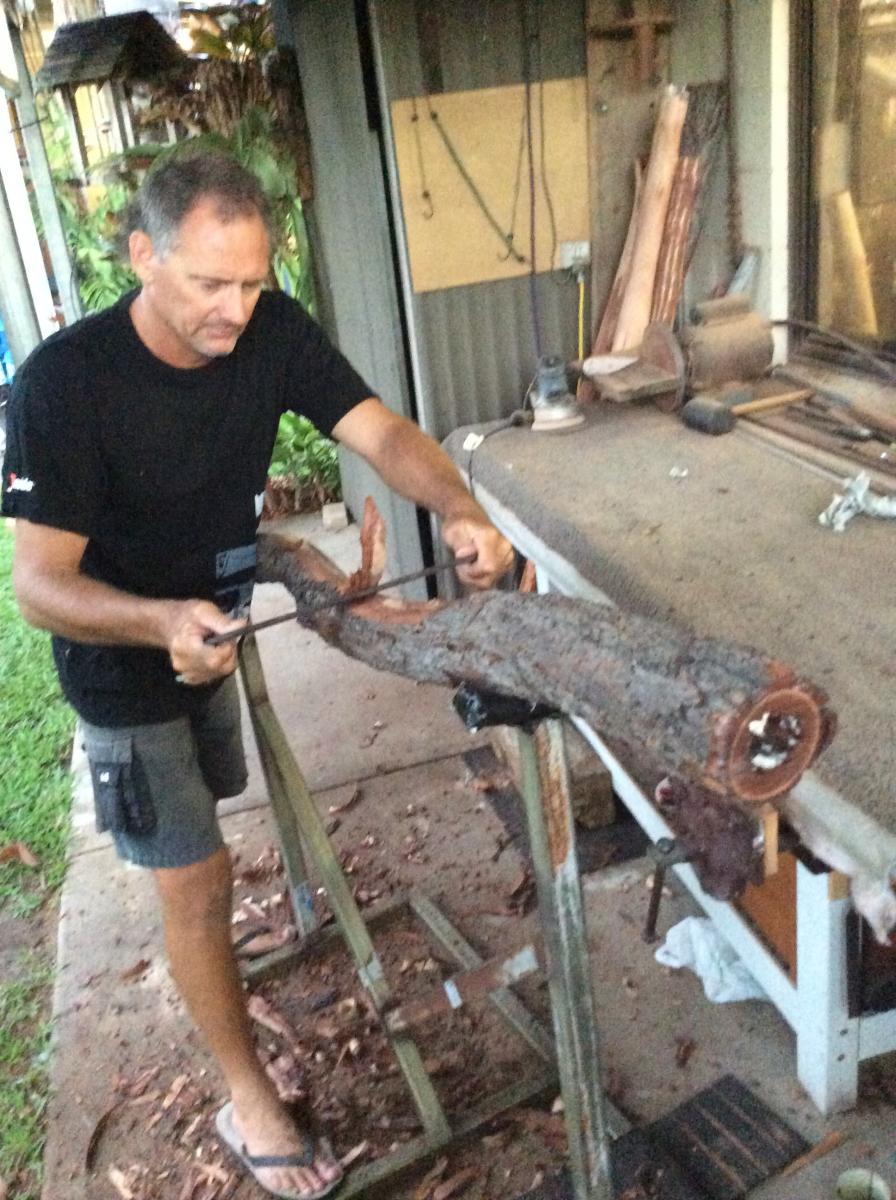
Bruce started making didgeridoos in the mid-1990s, and his passion is still as strong thirty years later! He works with three types of eucalyptus:
- Woollybutt
- Ironbark
- Box
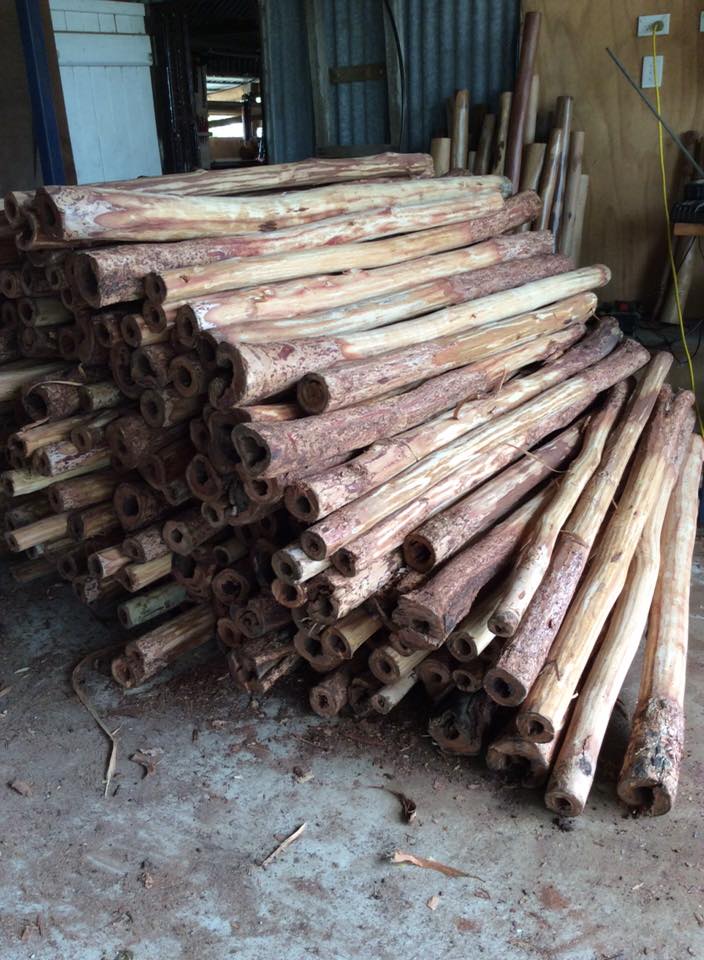
All his termite-hollowed logs come from northern Queensland and are cut by a renowned Aboriginal traditional owner. They dry for at least twelve months before being worked. Bruce does not use wax to reduce the diameter of his mouthpieces.
Either the natural hole is the right diameter, in which case Bruce shapes the mouthpiece directly in the wood, or he fits a camphor laurel mouthpiece, a wood known for its antibacterial qualities. As far as I know, Bruce is the only maker to use this kind of insert: a real plus for a mouthpiece that is both very comfortable and antibacterial.