


Raw Eucalyptus Log TB2
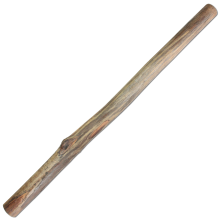
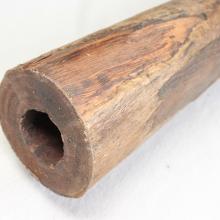
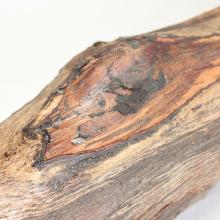
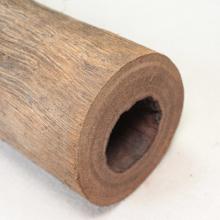
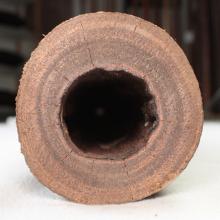
In short: A raw woollybutt eucalyptus trunk, 155 cm long, hollowed out by termites, for making your own didgeridoo. Video tutorial of over an hour and a block of beeswax included.
| Current note | A / La |
| Type of eucalyptus | Woollybutt |
| Length | 155 cm |
| Gross weight | 8.6 kg |
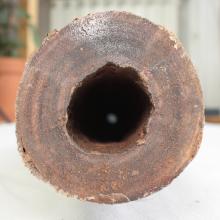
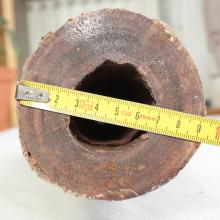
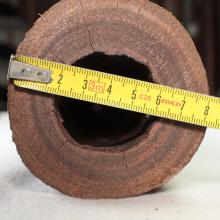
| Section 1, inner | 4 cm |
| Section 2, inner | 4.6 x 4 cm |
Make your own didgeridoo: Who has never dreamed of making their own didgeridoo from termite-hollowed eucalyptus? The trunk is delivered raw: it is up to you to give shape to your future instrument!
The current note: It is given as a guide: it is the lowest note you can obtain. You will change it as you work on the didgeridoo.
The video tutorial: To help you, after you order I send you the complete tutorial "How to make your own didge" by Alex Murchison: more than an hour of video. Alex has been a didgeridoo player, maker and teacher in Australia for nearly 25 years.
Passionate about passing on his knowledge, in 2006 he created a programme devoted to didgeridoo making, and has been travelling round schools and training centres ever since.
The harvest: The trunks are generally collected in autumn, when the sap is not active. They are genuine termite-hollowed eucalyptus, cut with the authorisation of the state government. They are mainly woollybutt eucalyptus, with a few box trees. Naturally, they are free of termites.
A few of the steps that await you:
- Remove the bark
- Adjust the note by cutting both ends
- Enlarge the inside of the bell
- Shape the inside of the mouthpiece
- Sand the outside
- Seal the inside
- Seal the outside
- Make the beeswax mouthpiece
Tools needed (indicative, non-exhaustive list):
- 200 mm half-round rasp
- Sandpaper sheets, assorted grits
- 400 mm hand saw
- 160 mm drawknife
- PVA wood glue
- Block of natural beeswax
Included:
- Free shipping
- 40 g block of natural beeswax
Why this price? All the trunks I supply are of superior quality, so that you end up with a didgeridoo of the Budget O'Meara class. Transport accounts for a large part of the price. And since this type of raw trunk is only found in Australia, it is a real opportunity to bring your own instrument to life!