


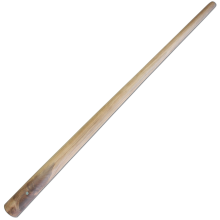
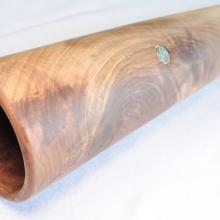
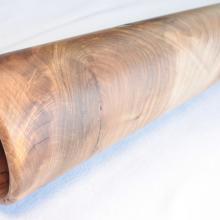
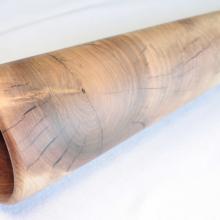
Duende Magius
Duende Classe or (master)
Comments from Dubravko Lapaine: Magius is our new didgeridoo model that we offer in tones from A1 to D2. This is a very high-end didgeridoo that offers an unprecedented level of playing comfort combined with supreme sound and tuning.
But it was not an easy and direct path to get there. Let me explain. When we created Sumo it brought many new aspects of sound and playing to our style of didgeridoo and it was very different from anything else we have created. The biggest difference was those air pulses for the percussion sounds which were such full, perfect bubbles. Soft but firm. All this was supported by excellent counter pressure.
The next stage of thinking was to create an instrument that would be strong in the two aspects that Sumo is not and which are very important to me. One is the precision of the game, the ability to articulate well at higher speeds and the other would be the toots. If you have experience designing didgeridoo, you may know that it is difficult to improve good didges. In other words, it's hard to turn something into a great design so you don't lose more than you gain. But this time, the magic worked. Magius is indeed a didgeridoo greatly improved in terms of toots and articulation while retaining much of the incredible playing comfort of the Sumo. In a way, you could think of Magius as 70% Sumo + 30% Spirit (or 75/25 in previous models), although this is just an image to help you understand, not a the exact reality. We take our didgeridoo design very seriously and we are very picky about what we make into models.
Magius was therefore tested and perfected for more than two years before this version. What you can expect is an incredibly versatile didgeridoo, falling somewhat in the middle of all didgeridoo playing techniques. If we're talking numbers again, I'd say Magius is 60% push, 40% pull (or 55/45), which is an incredible position. Don't get into that "jack of all trades, master of none" mindset, because the way Magius sits comfortably on his throne of balance is nothing short of magical. Don't expect it to be ideal for traditional play and don't think it will overpower the spirit and you will have an incredible delight in what didgeridoo magic really is and the goodness it can bring to your game.
My comments: I am incredibly lucky to be able to present such an instrument to you. It is made in one piece, pierced on both sides. The instrument is a true sculpture, both visual and sonic. I don't have enough rating stars to add more because this instrument is so wonderful. I now understand why the Dubravko gold class is sold at this price... quite simply because this instrument is much more than a didgeridoo, it is above all a professional quality musical instrument!
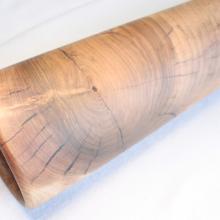
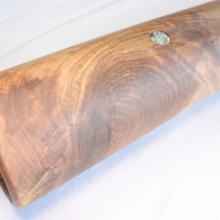
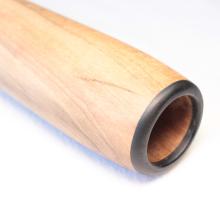
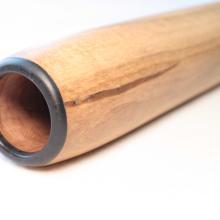
- Duende Magius: Gold class (master) in Walnut / water-based PU impregnated epoxy finish
- Shipping costs are free! (only for France)
- Didgeridoo Passion also offers you the carrying case
Are you going to tell me it's a bit expensive for a Didgeridoo?
Didgeridoo Passion selects high-end instruments for you for extraordinary sound and playability! It is an investment that must be made by all those who want to access the high end in terms of sound, design and handling. Sound quality is in symbiosis with a perfect body!
Classification
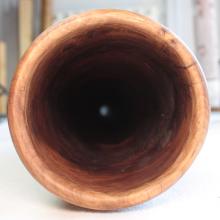
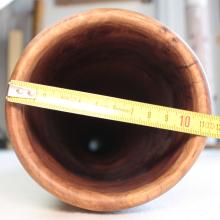
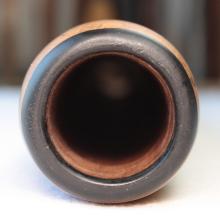
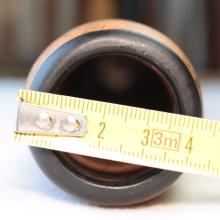
This scale is the result of an air column/bell start ratio If we divide the diameter of the bell with that of the beginning of the air column we get a number between 1.5 and 3.5. We can classify all the didgeridoos in 4 large families. Each family groups the instruments with a similar character, simply based on the overall shape of the air column (conical/cylindrical) and on the diameter of the column (wide/narrow). The result is a simple and very reliable reading grid, making it easier to search and purchase on line.
The diameters are measured with a caliper, start of the air column after the mouthpîece. This ratio is very reliable for a didg having a air column with a 'smooth' internal work, in the case of a hollowed eucalyptus instrument it give an approach of the instrumental character.

Duende
Dubravko Lapaine and Danka Tišljar, makers of "Duende" didgeridoos
Here is something I have never done before, but to introduce the subject, I am going to compare the world of didgeridoo makers to the world of cars. With cars, you find all sorts of brands, finishes and engine sizes, all with the same goal in the end: to take us from point A to point B. Yet you will all agree that the comfort is not the same in a Citroën 2CV and in a Ferrari… Well, it is the same with the didgeridoo: the aim is always to convey a vibration.
After twenty years of playing, hundreds of didgeridoos tried and meetings with a great many makers, I now have enough perspective to tell you: if I had to name the Ferrari of didgeridoos, it would be Dubravko Lapaine's Duende. To really understand the characteristics of a didgeridoo, and therefore to be a good maker, you first have to be a good player.
You can see where I am going with this: Dubravko is recognised as one of the best technicians in the world. He is so demanding of himself that you can feel it in every one of his instruments. Why are Duende, in my opinion, the best didgeridoos you can find? It cannot be summed up in one sentence.
It all starts with the drilling process, which Dubravko has mastered to perfection: no cutting or gluing, for much better control of the dimensions. Imagine drilling perfectly straight over more than two metres…
Then comes the choice of wood. Here again Dubravko leaves nothing to chance: he uses the densest woods there are, to contain the vibration as much as possible and offer an extraordinary richness of overtones and playability. But there is a downside: the tools have to be sharpened over and over again, which means a huge amount of work…
There is also the internal configuration of the air columns. Dubravko has developed his own configurations over the years and through his concerts: first and foremost he makes instruments for himself, seeking the best balance between subtlety of sound and technique, so as to perform every playing technique and every sound.
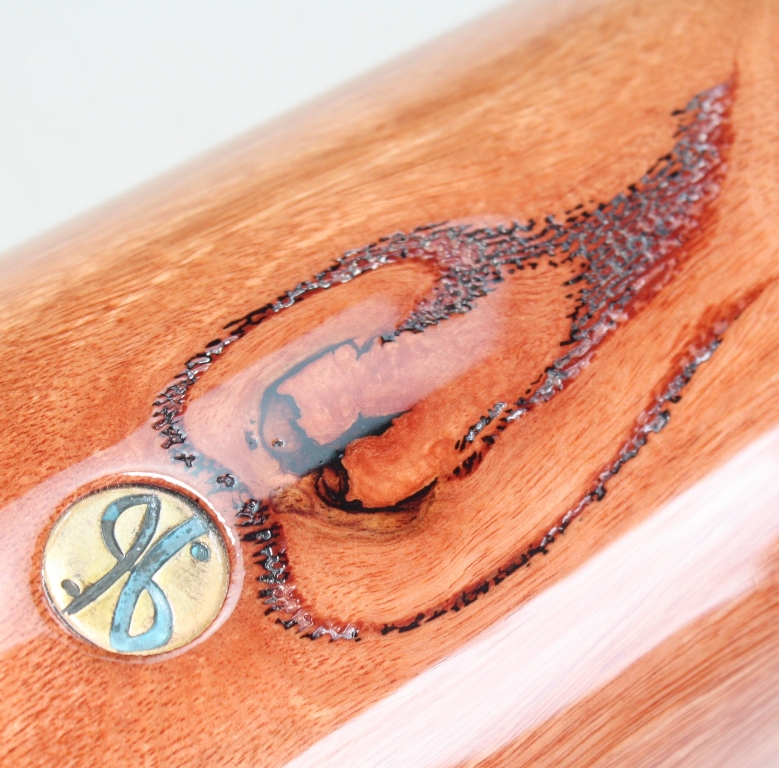
Finally, there is the finish, inside and out. A beautiful paint job makes an immediate impression on a car, and the same goes for a didgeridoo. Each Duende is truly unique: they are real collector's pieces. If you have ever held a Duende in your hands, you will understand what I mean. Inlays, engraving, pyrography and many other techniques add enormous value and bring the instrument to life.
I hope these words help you understand the value of Duende didgeridoos. So yes, Duende are not cheap, but after what I have just written, you can probably appreciate the exceptional value of these instruments. Just like a Ferrari, it is a treasure you treat yourself to for an ultimate passion: unique craftsmanship, for unique design, playability and finish!